Design Translation
From Body to Line
The design translation process begins at the moment the moving body is frozen. Selected frames extracted from the session footage become the raw material of the design. Each freeze captures a specific quality of movement, a gesture, a spatial direction, a dynamic tension, and holds it still long enough to be read as form.
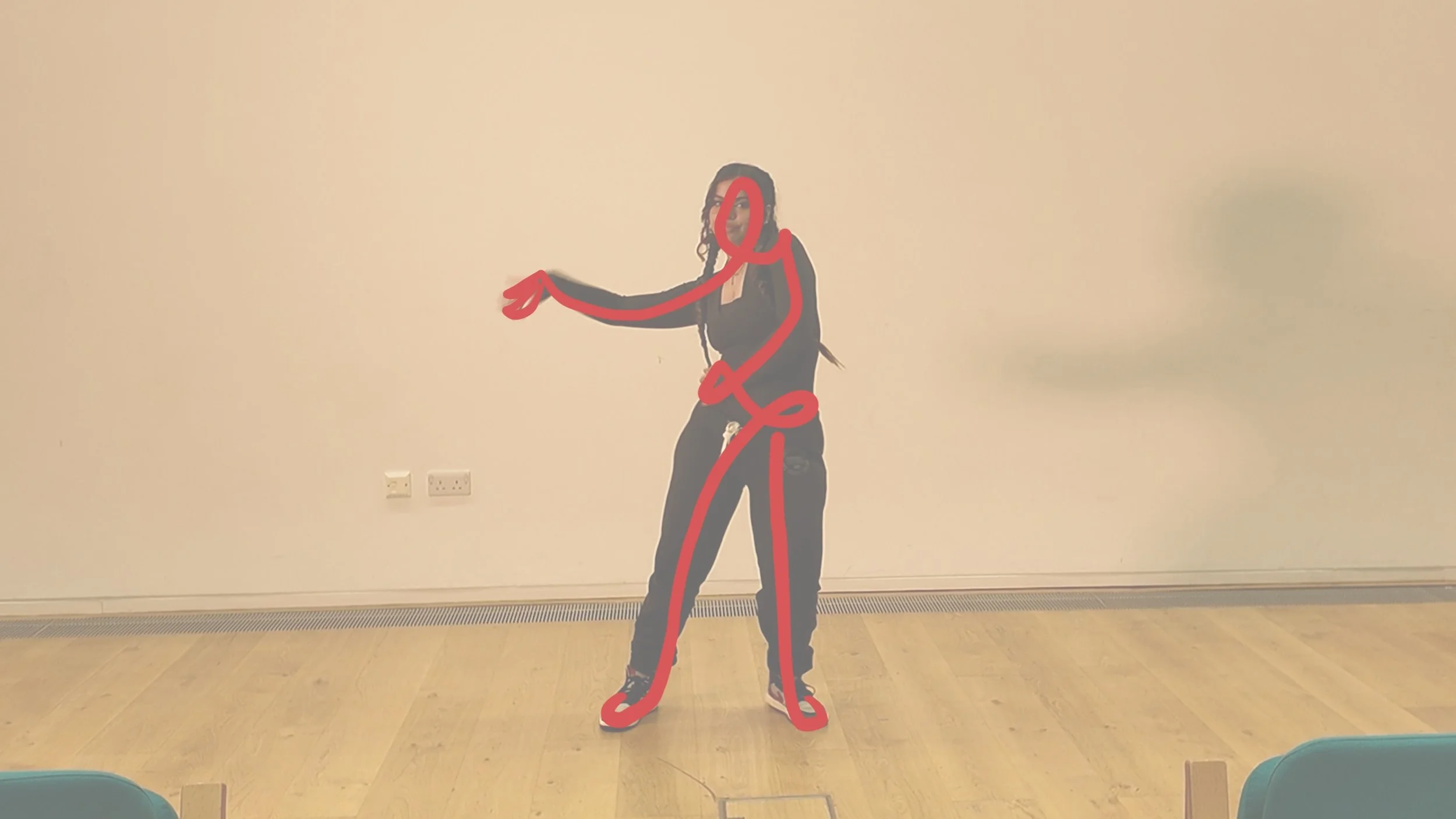
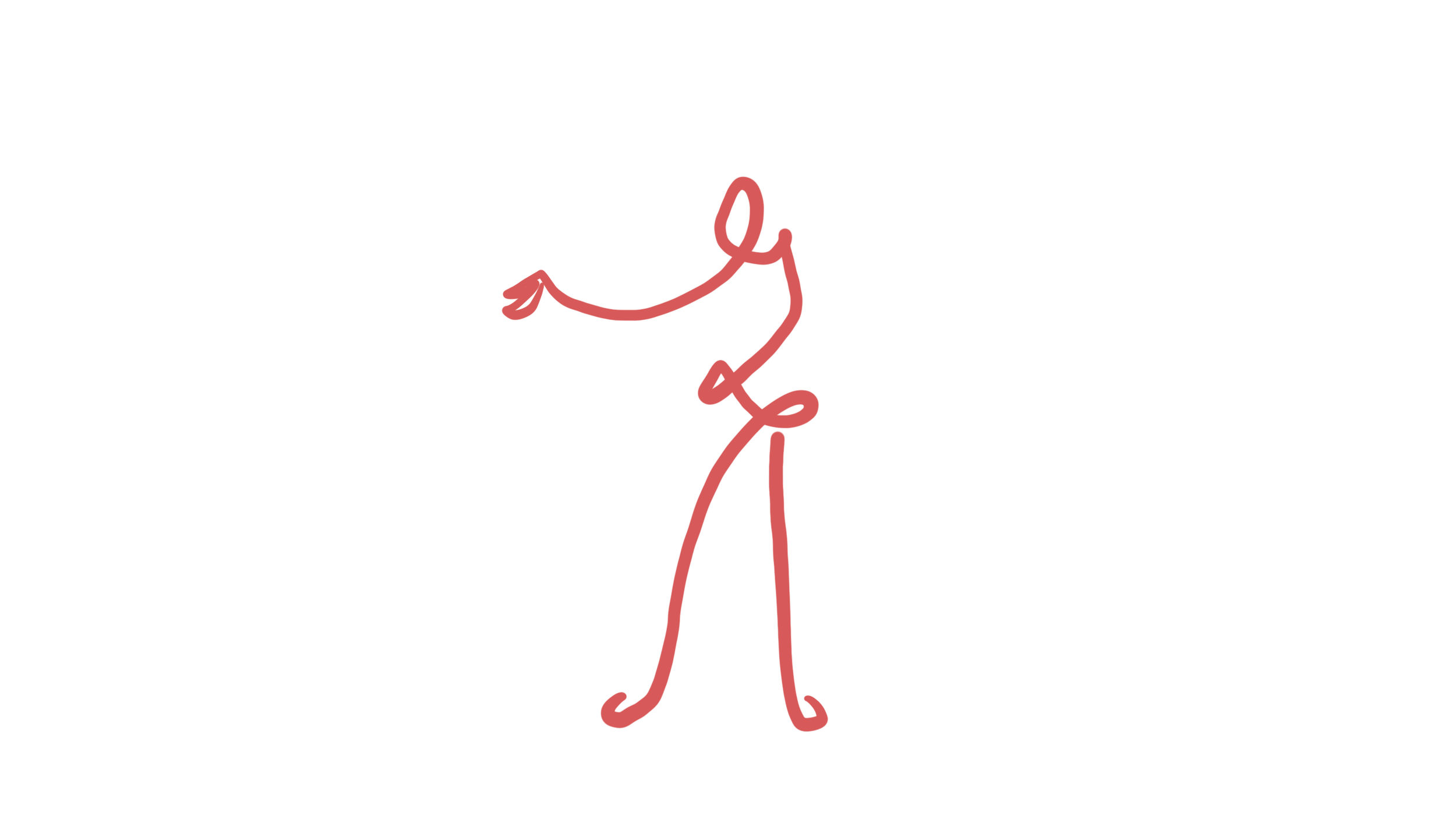
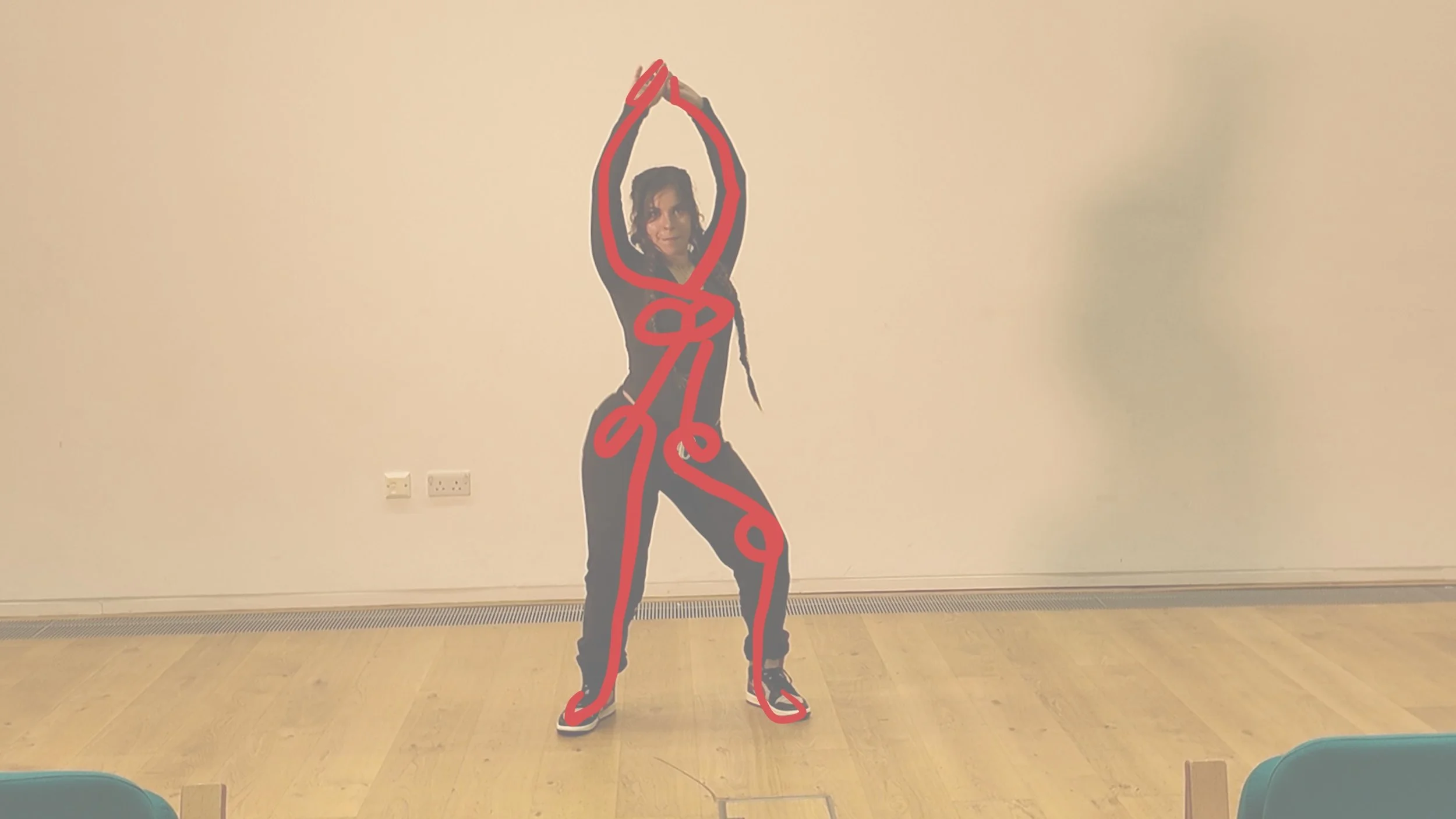
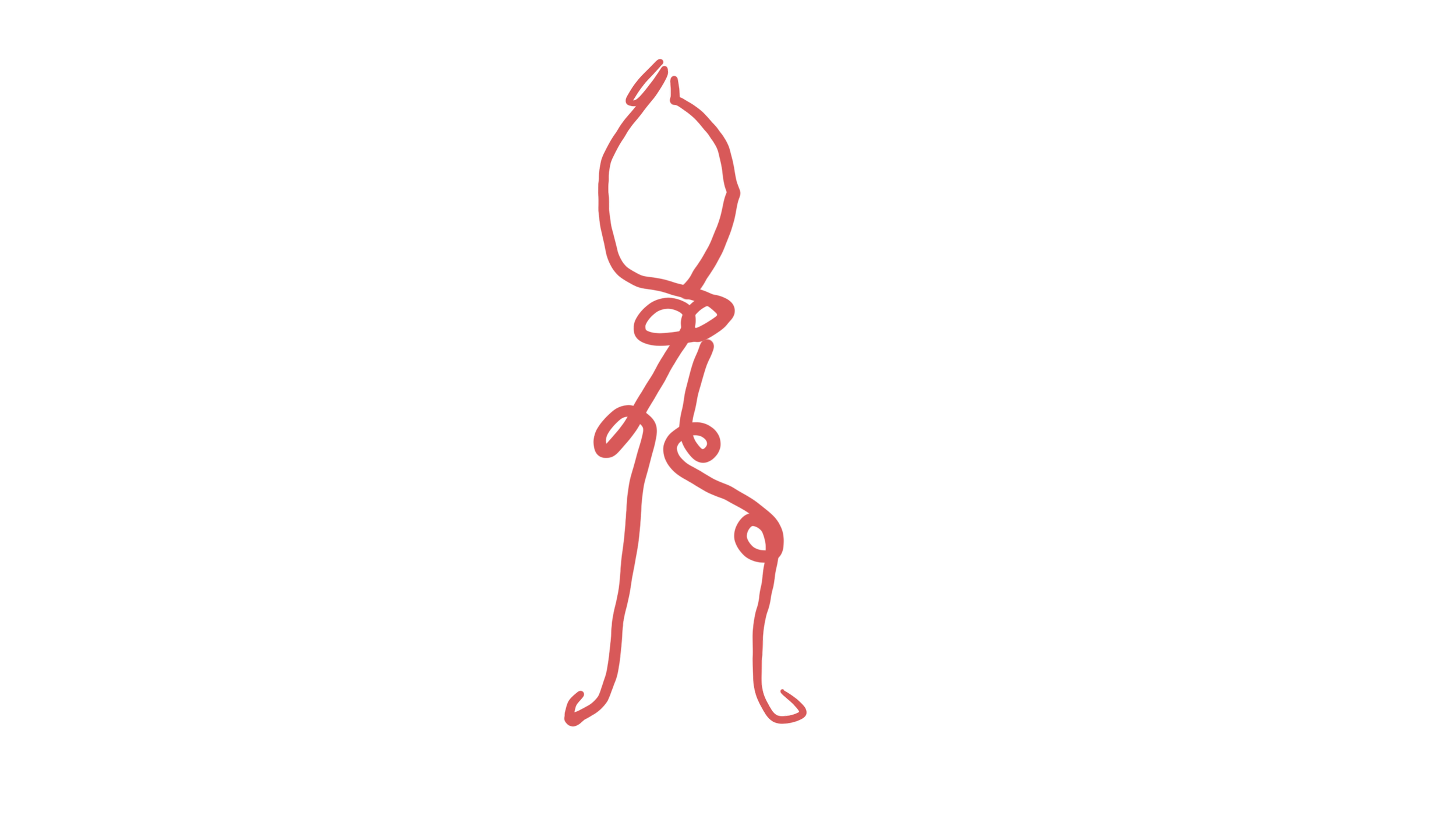
Using Procreate, the essential lines of each frozen pose are traced directly onto the image. These traces are not technical drawings. They are gestural recordings of what the body was doing at that precise moment. The line follows the logic of the body, not the logic of pattern making.
Mimi Session:
Mimi Still002
Mimi Trace Still002
Mimi Still003
Mimi Trace Still003
Mimi Still005
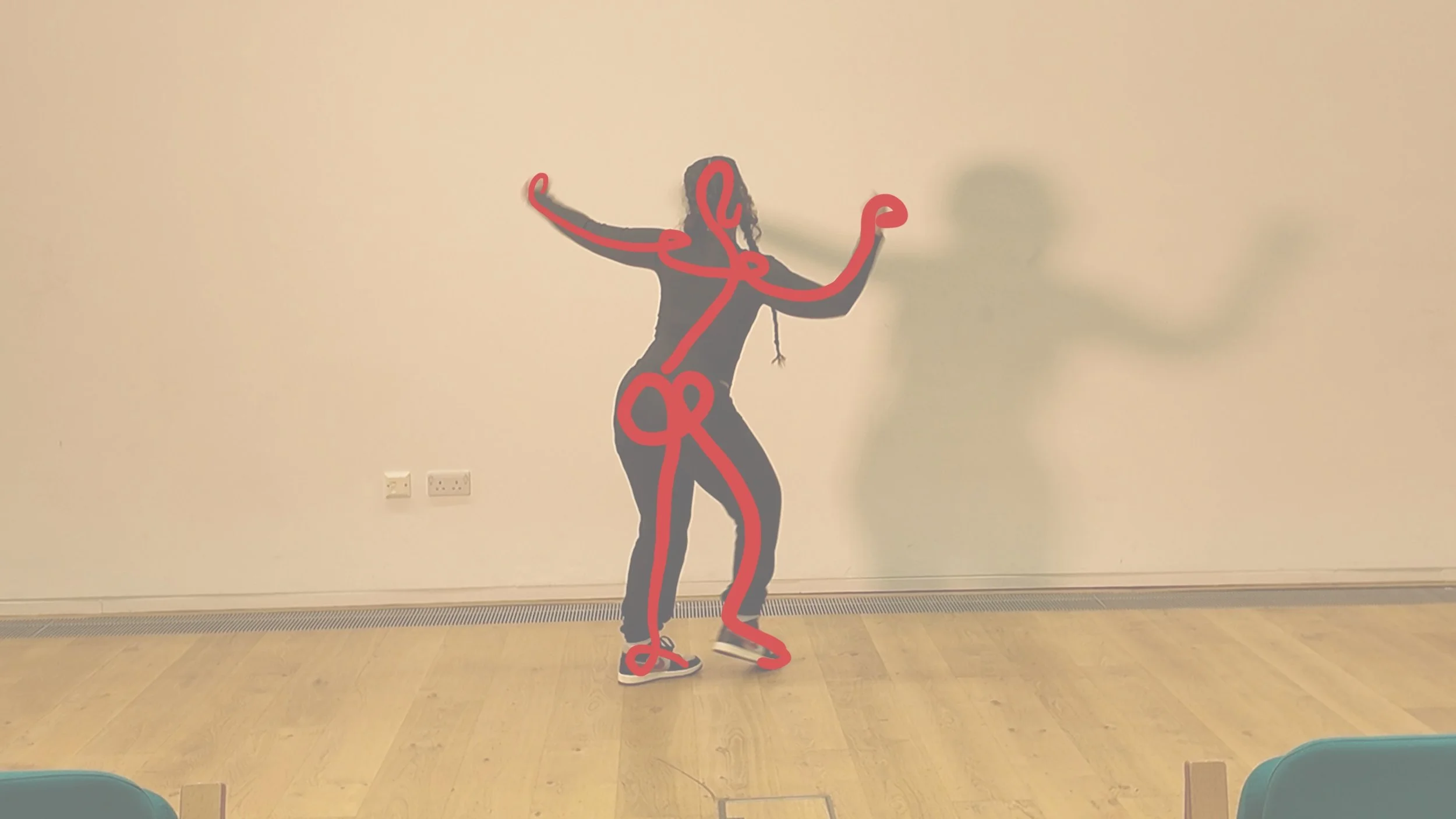
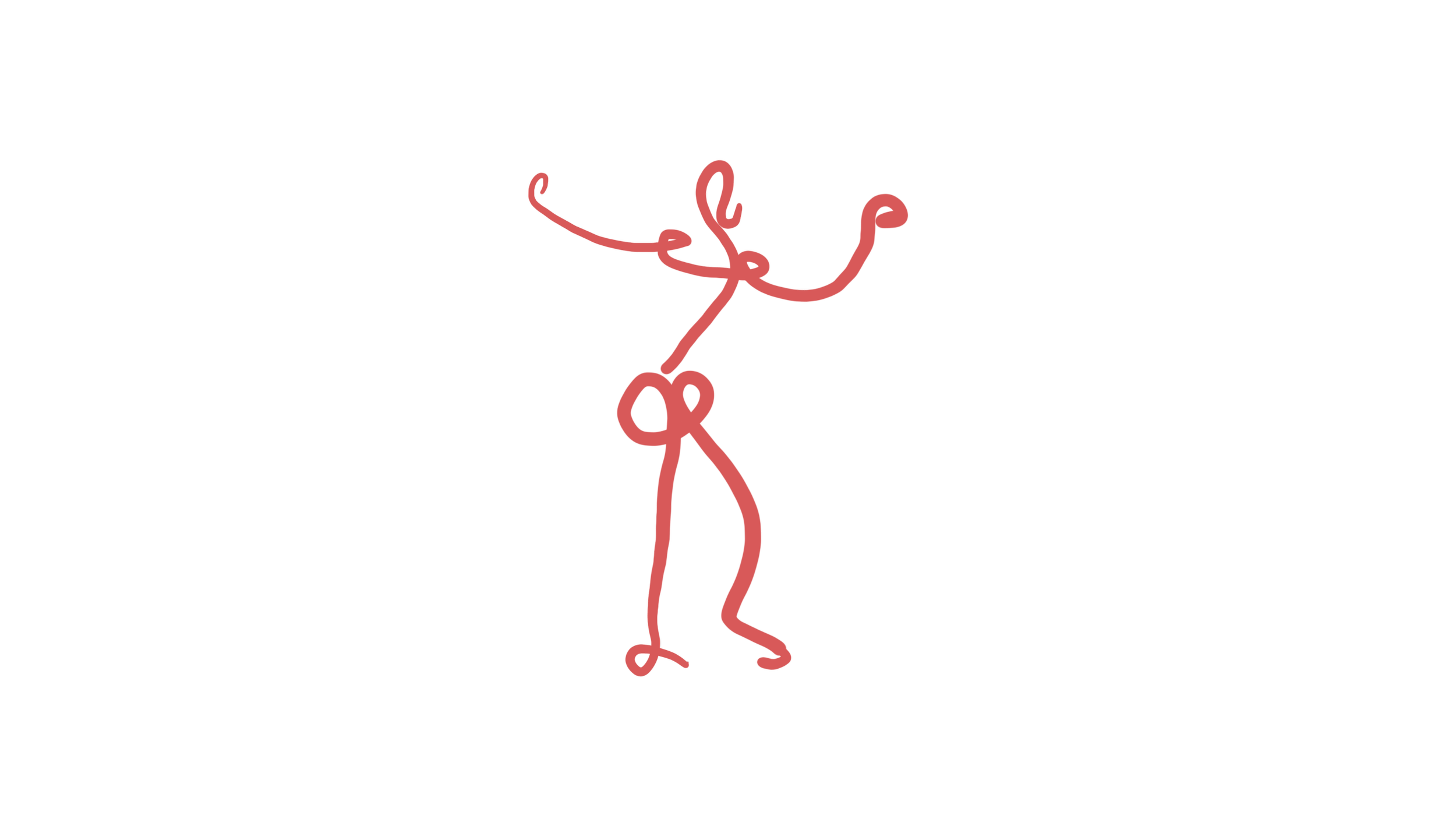
Mimi Trace Still005
Mimi Still008
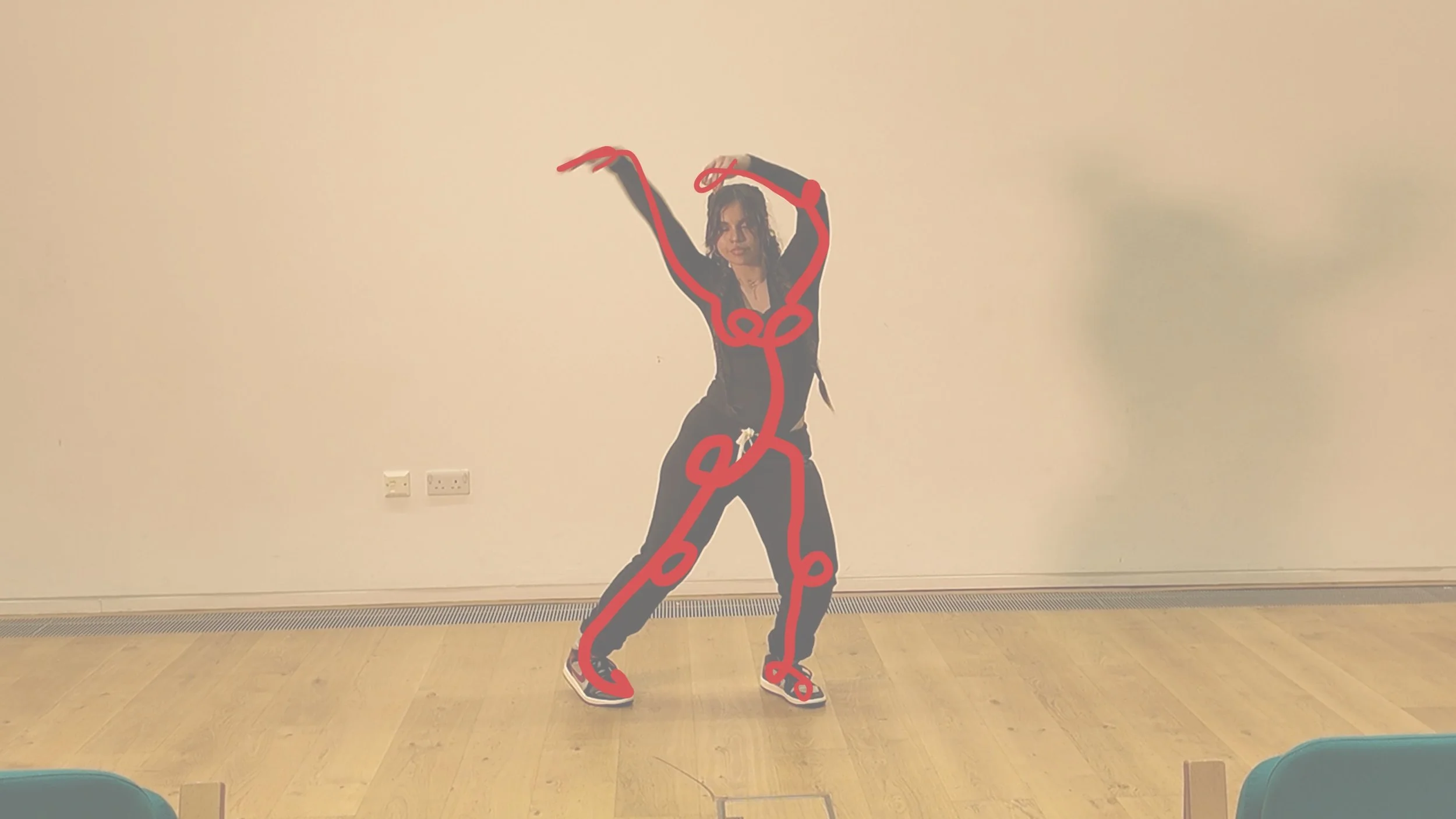
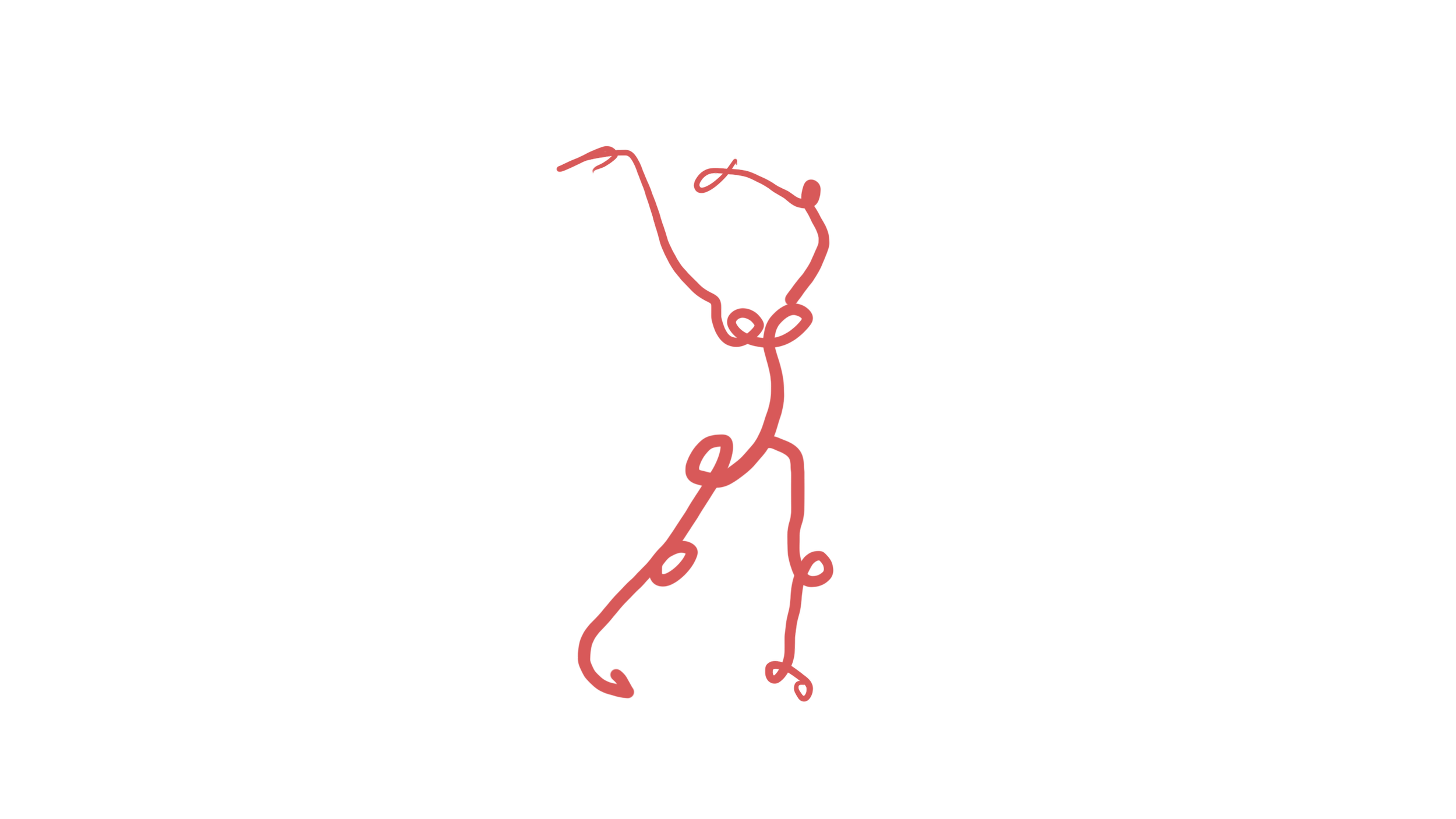
Mimi Trace Still008
Mimi - Session 1 Traces
The four traces extracted from Mimi's session reveal a consistent visual language rooted in her belly dance and multi-style movement vocabulary. The lines are fluid, continuous and organic. The body undulates rather than cuts. Curves dominate, diagonals are soft, and the overall silhouette flows from one joint to the next without interruption.
These traces generate a design language of waves, arcs and gentle spirals. The body is never angular. Even in the most dynamic poses, the line returns to roundness. This vocabulary will inform the surface pattern development and the softer structural elements of the garment.
Wendy Session:
Wendy Still003
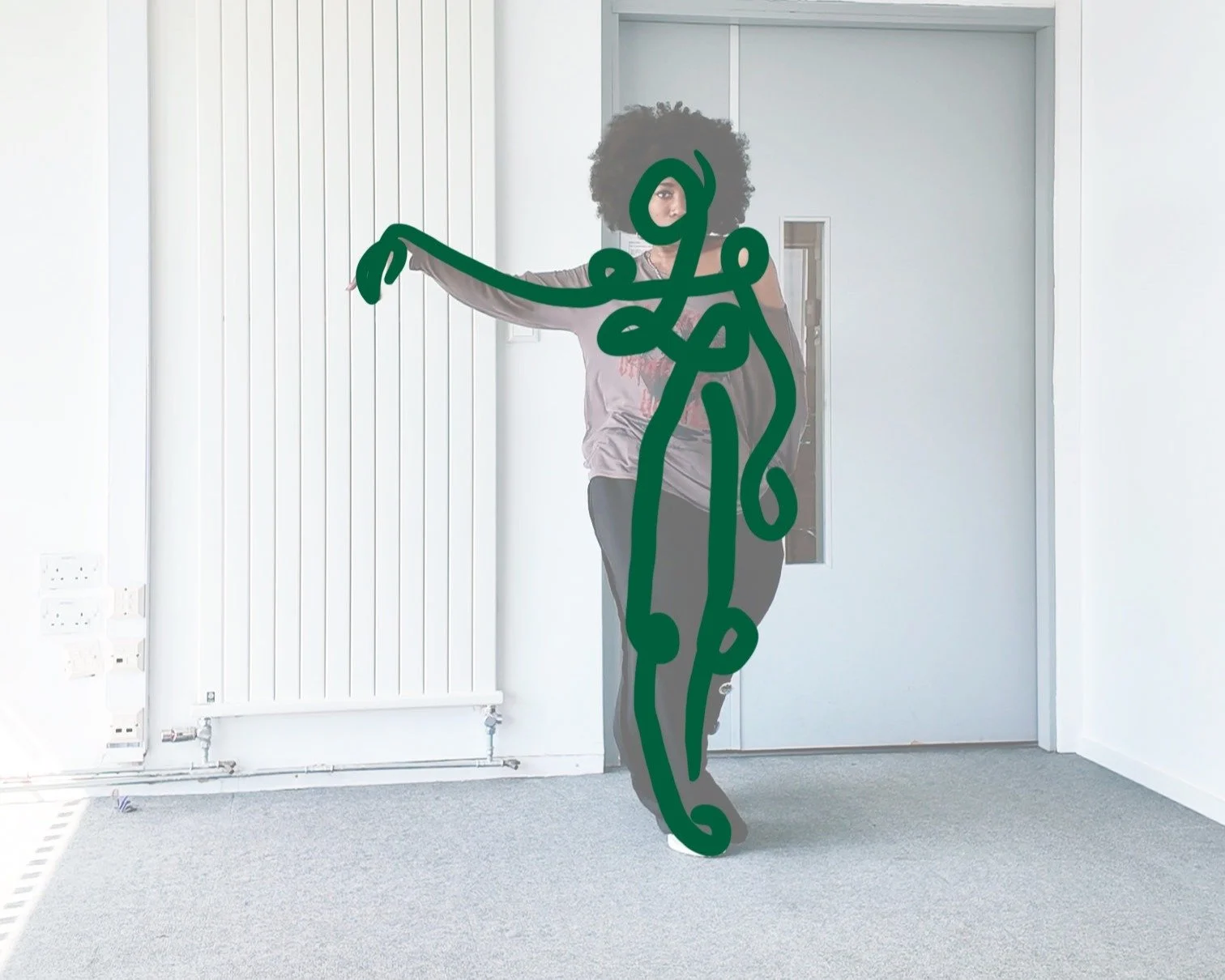
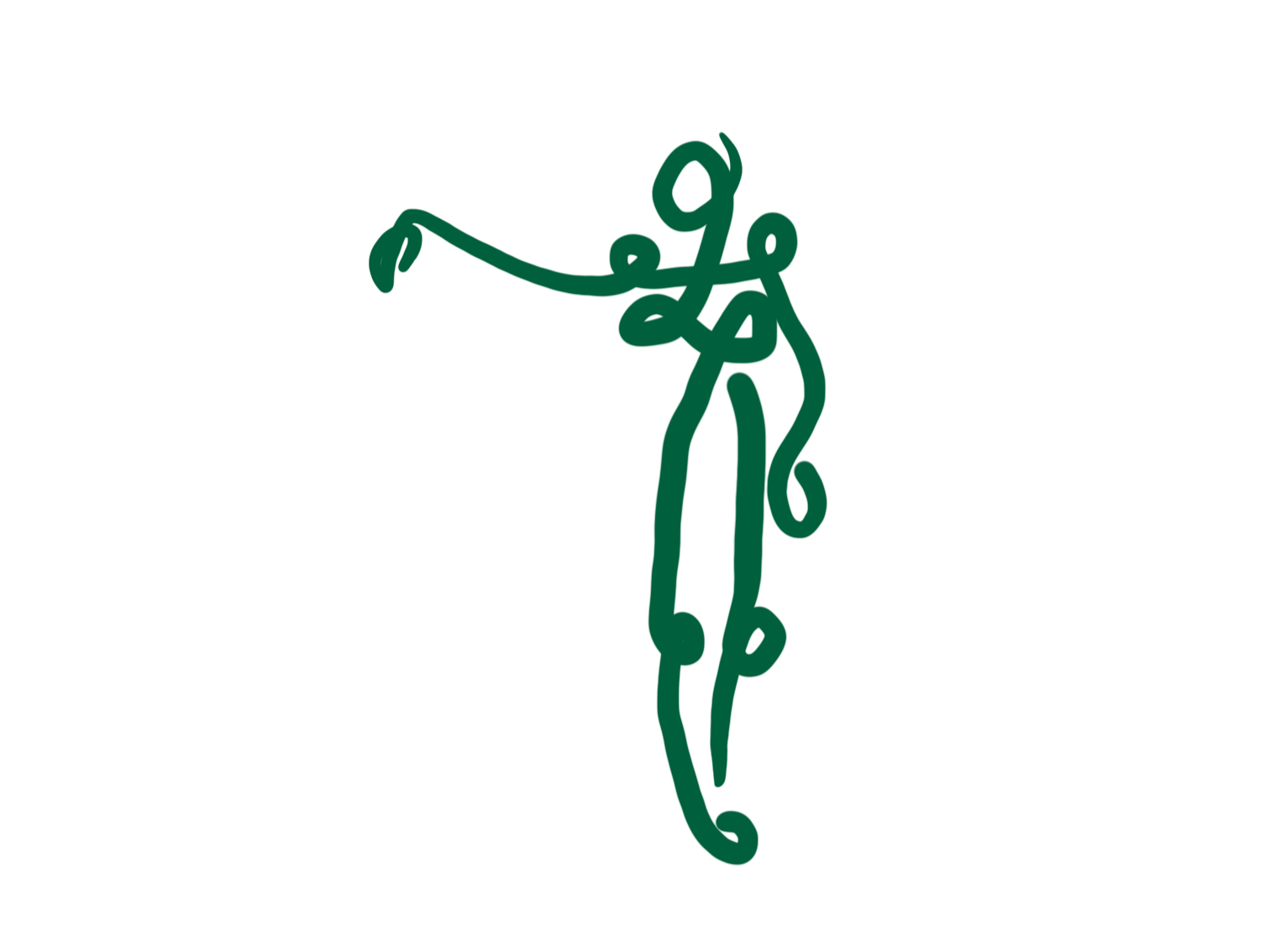
Wendy trace Still003
Wendy Still004
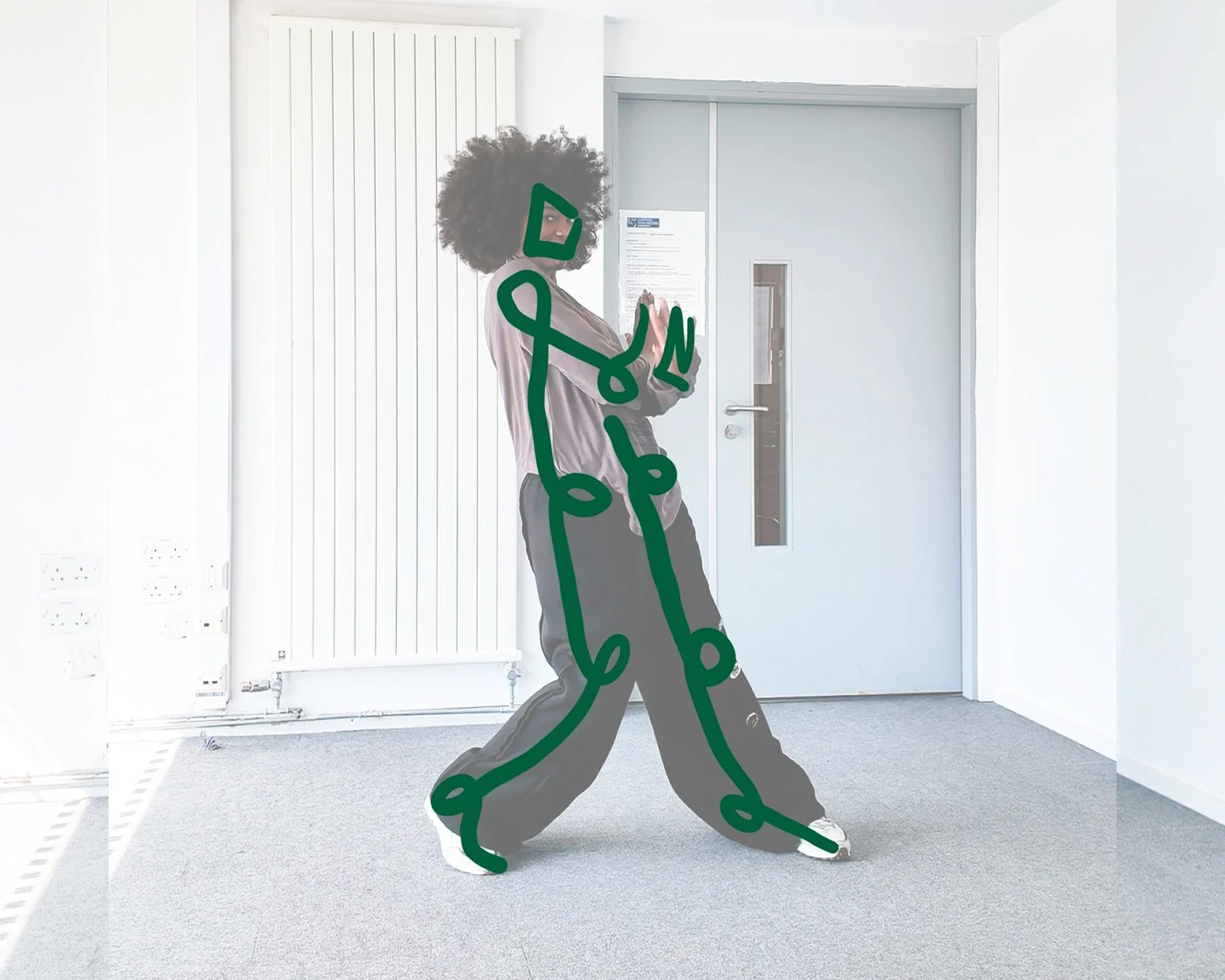
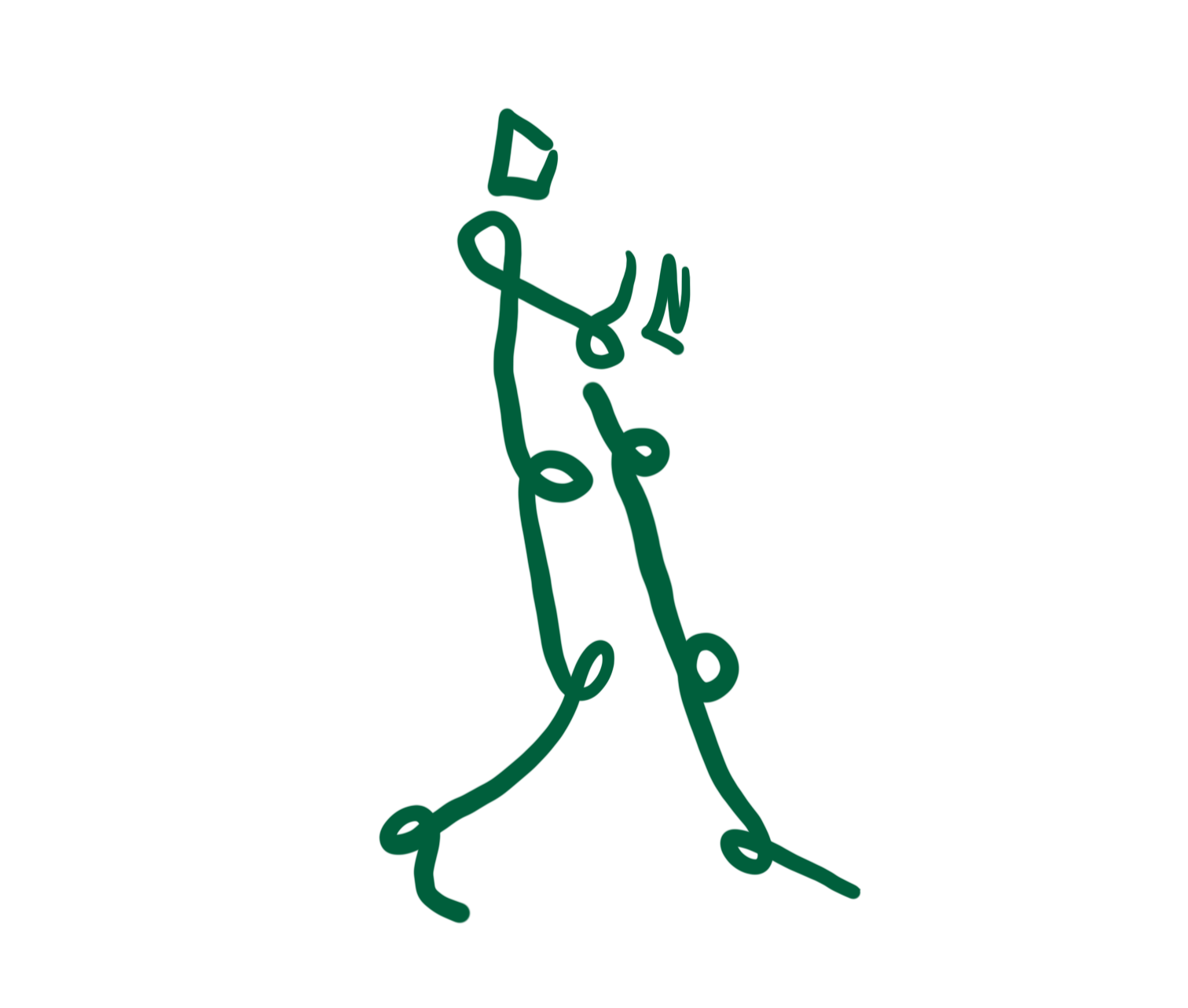
Wendy trace Still004
Wendy Still005
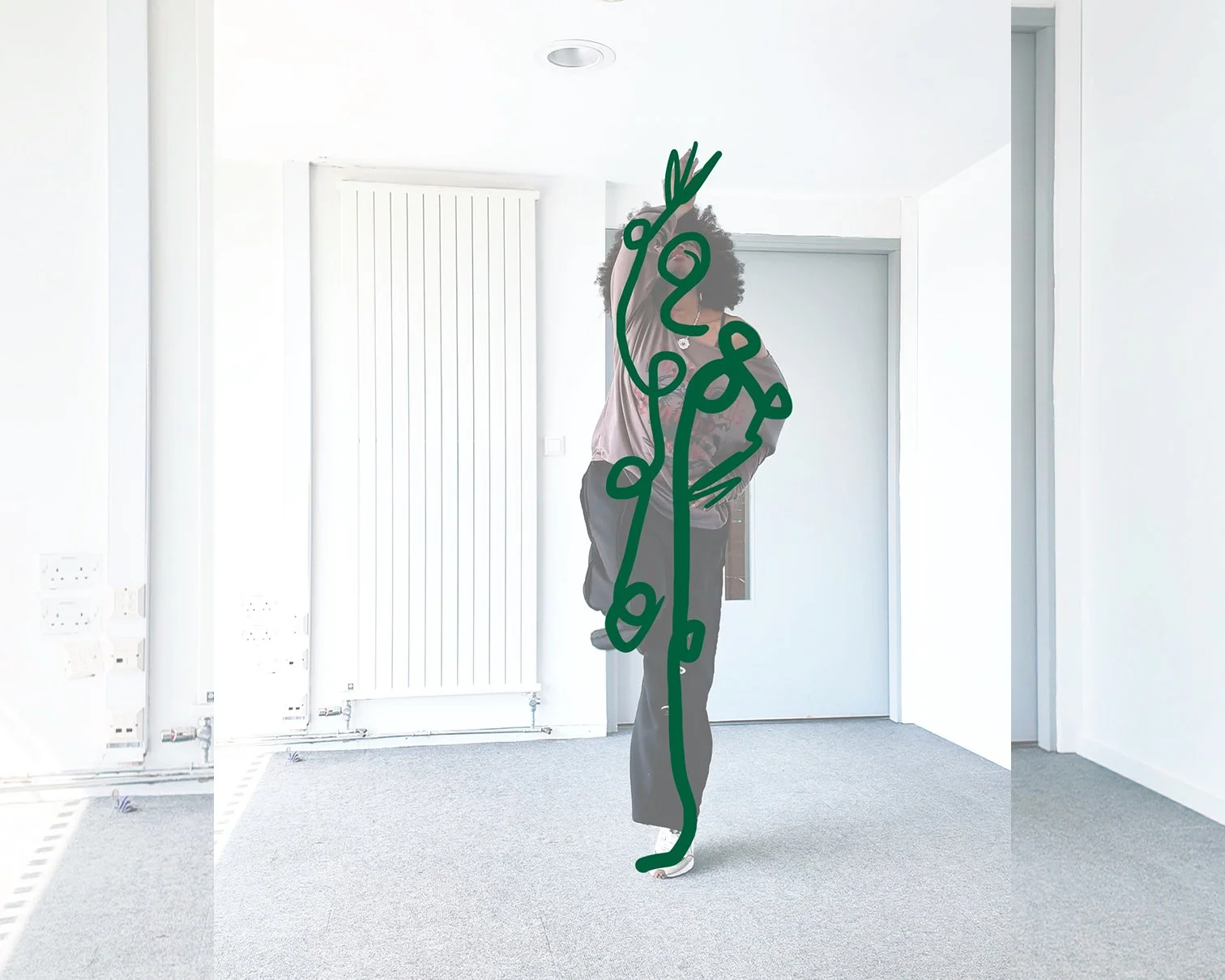
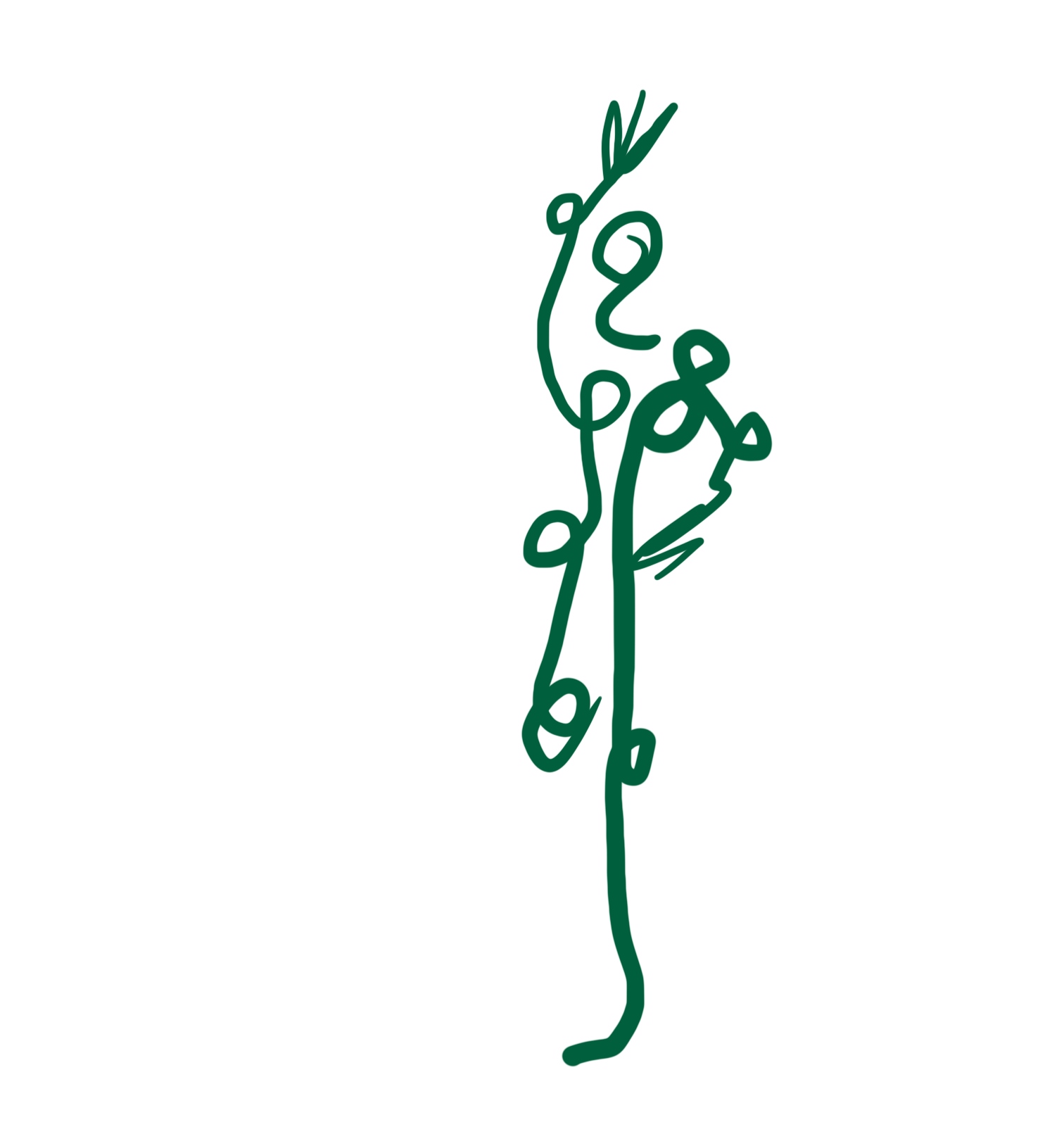
Wendy trace Still005
Wendy Still007
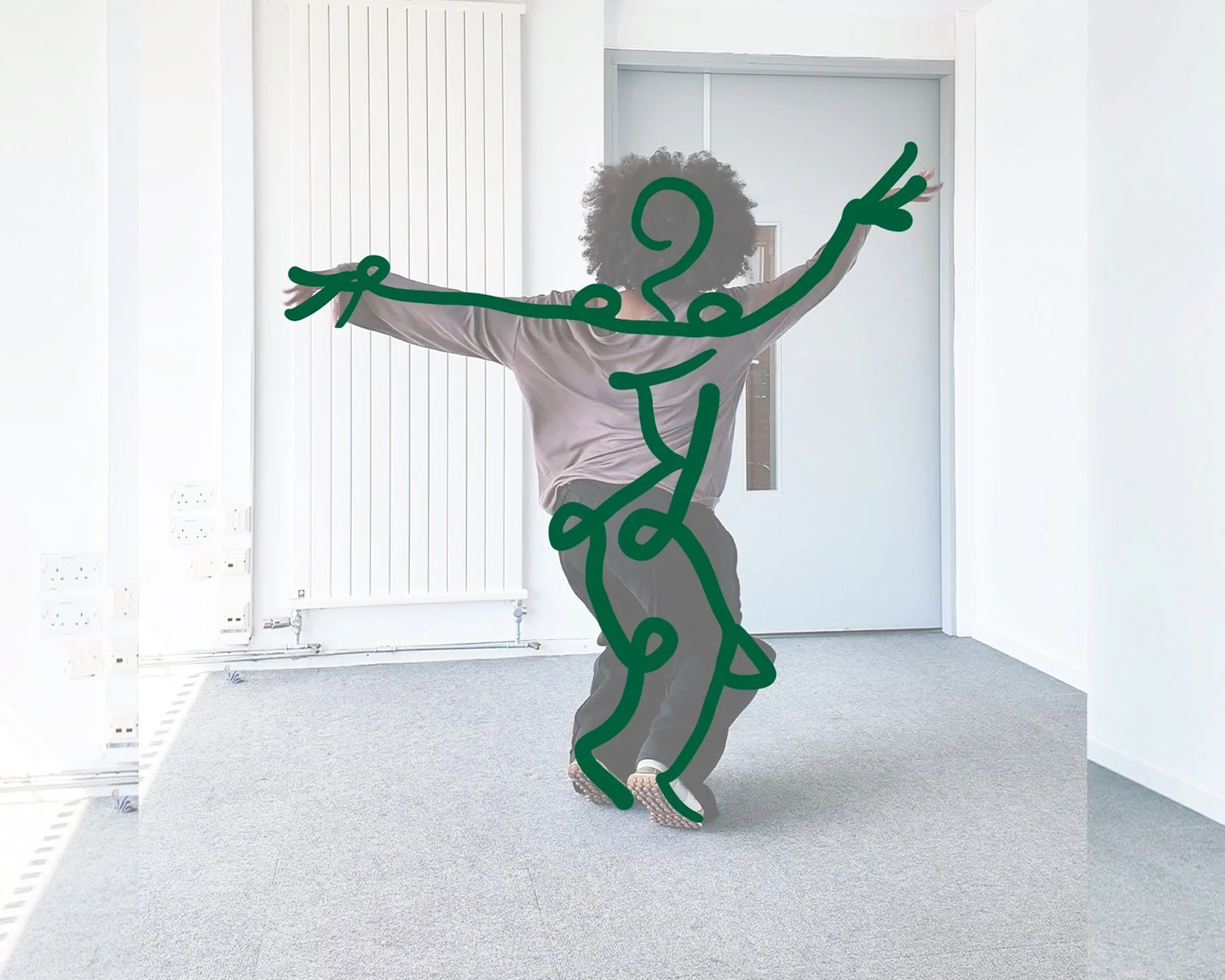
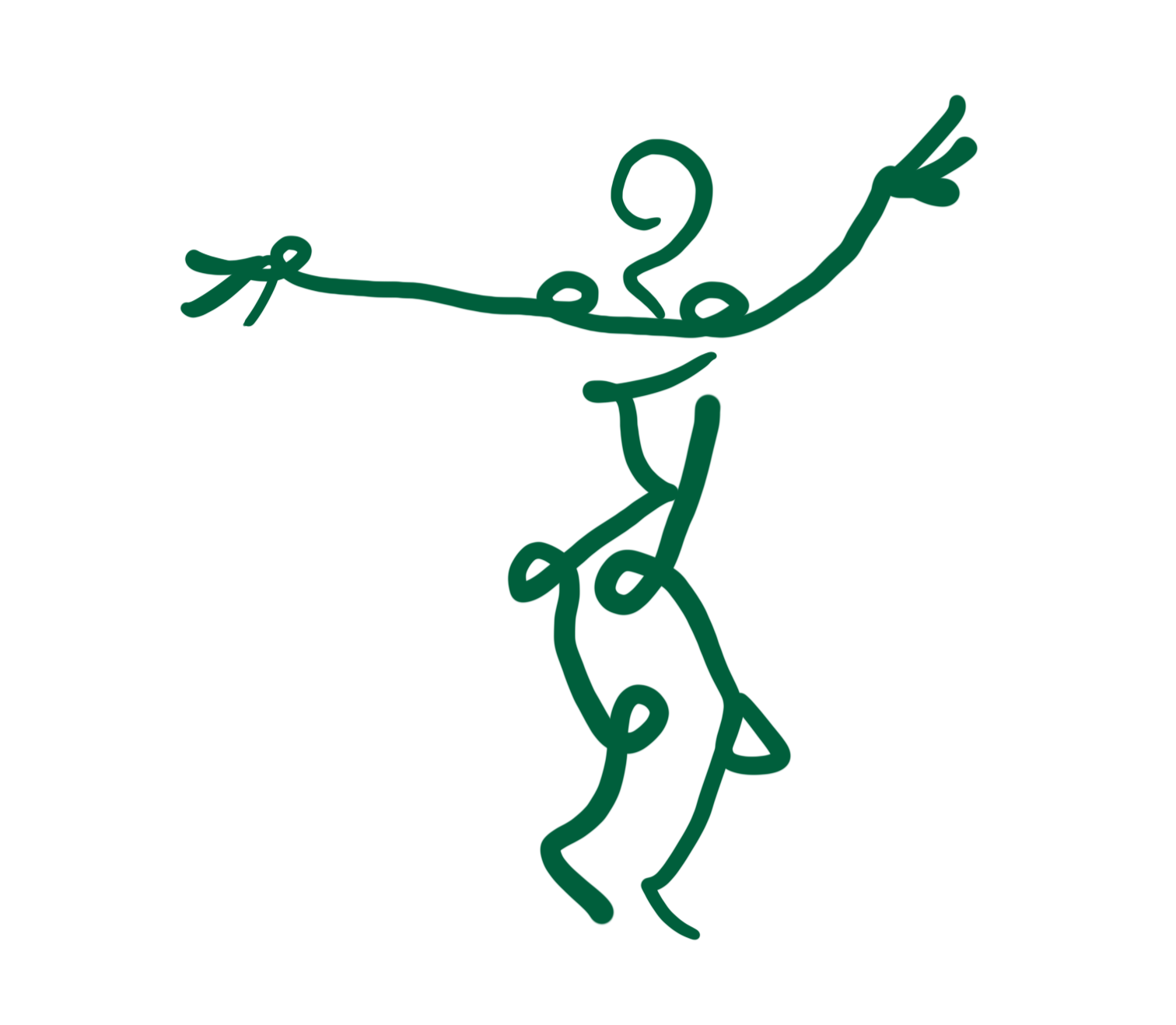
Wendy trace Still007
Wendy - Session 2 Traces
Wendy's traces reveal a much more varied and contrasted vocabulary, directly reflecting the two musical environments of the mix.
Deep House traces - Still 003, 004, 005, 007
The Deep House poses generate sharp, directional lines. Arms extend fully in strong diagonals. The body leans, reaches and projects into space. The traces are angular and decisive. There is intention in every line. These poses confirm what Wendy described in her own words : sharp edges, edgy forms. The design language here is geometric, structured and precise.
Ndombolo traces - Still 010, 012, 015, 017
The Ndombolo poses tell a completely different story. The body widens, lowers and roots. Still 010 shows legs planted far apart, the weight distributed evenly into the ground. Still 012 captures the full span of open arms from behind, the widest silhouette in the entire collection of traces. Still 015 and 017 show the body folding inward and forward, round and heavy, pulled by gravity. These traces generate wide, curved and earthy forms, exactly as Wendy described : earthy, wide, round, earth.
Wendy Still010
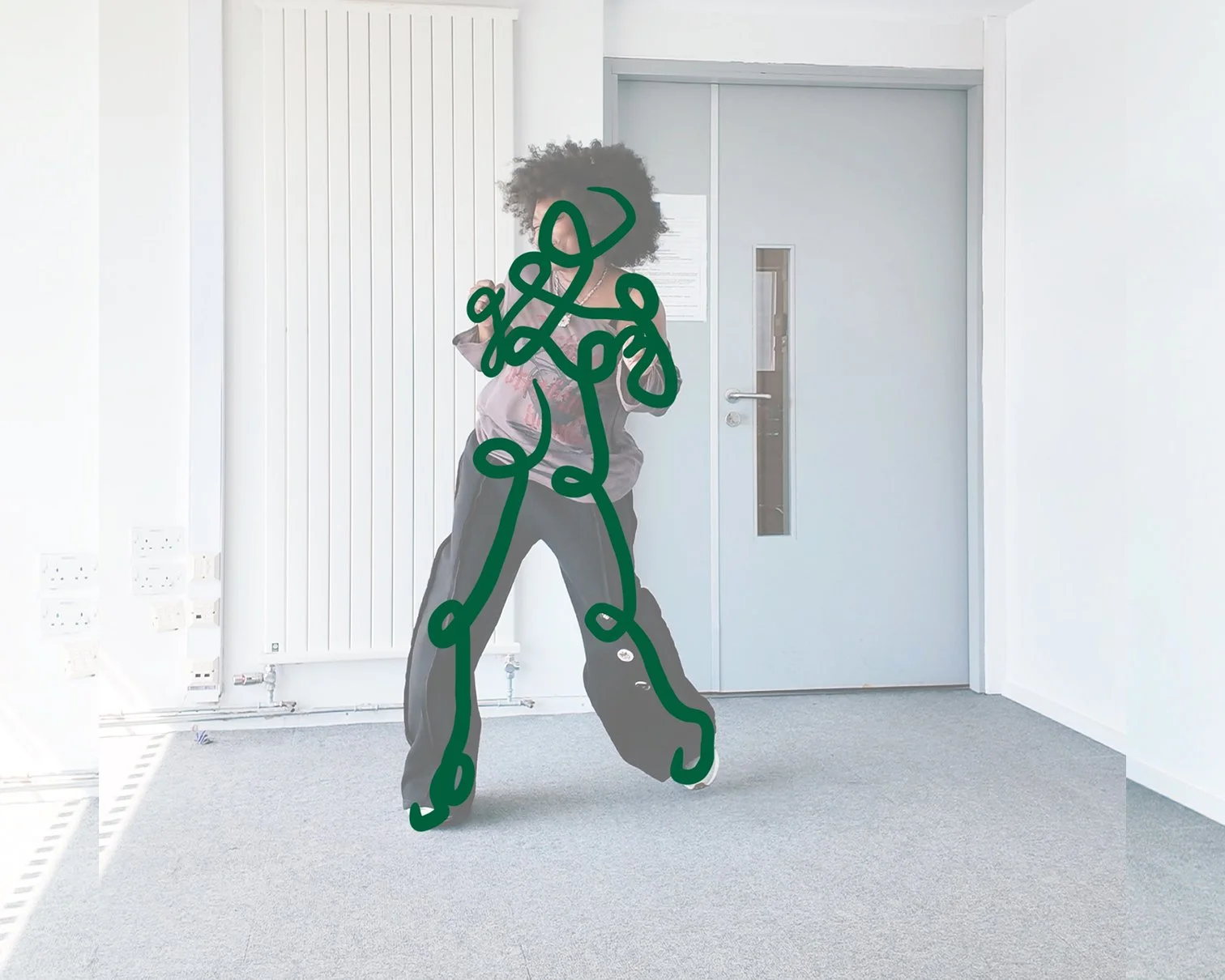
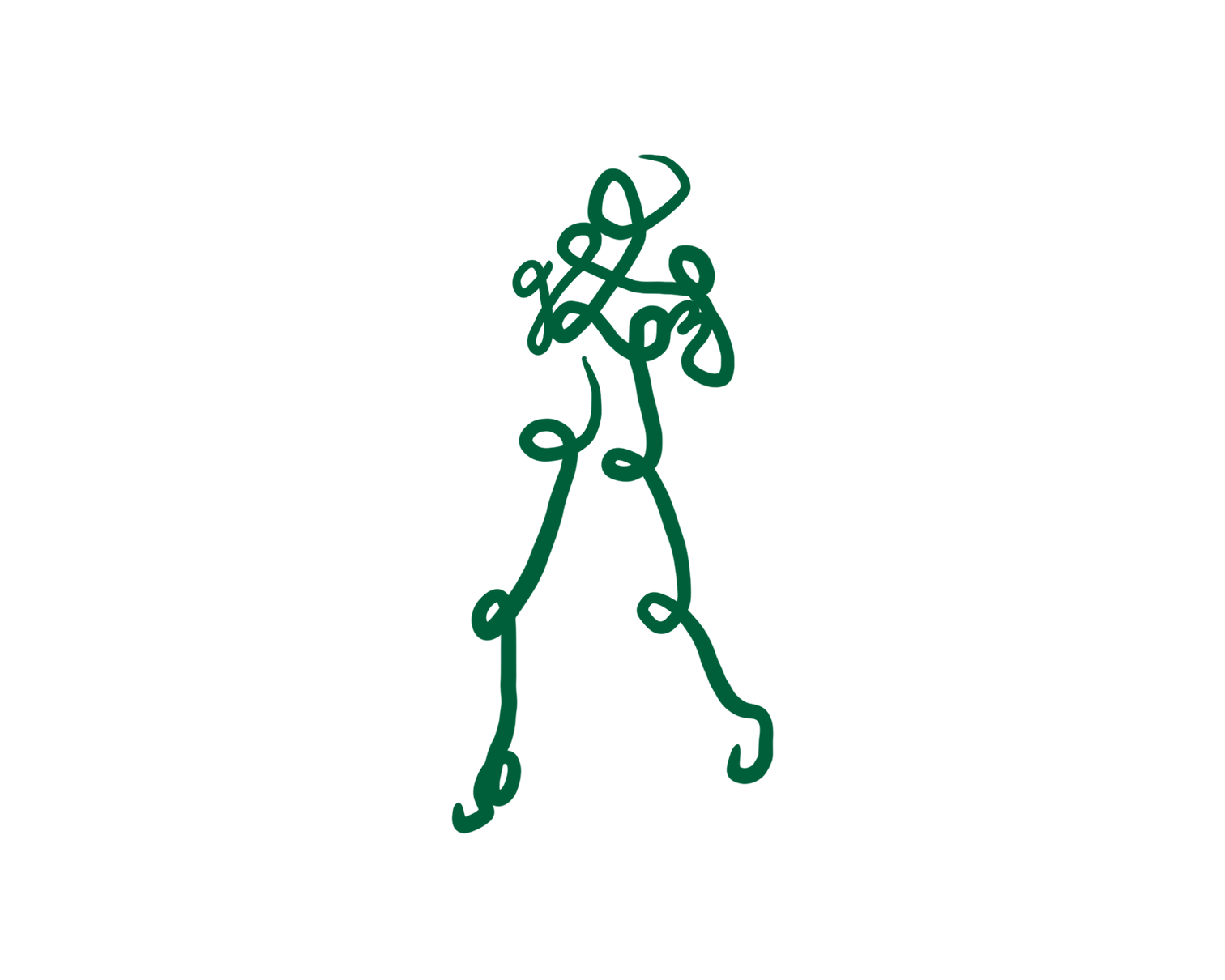
Wendy trace Still010
Deep House Dance
Ndombolo Dance
Wendy Still012
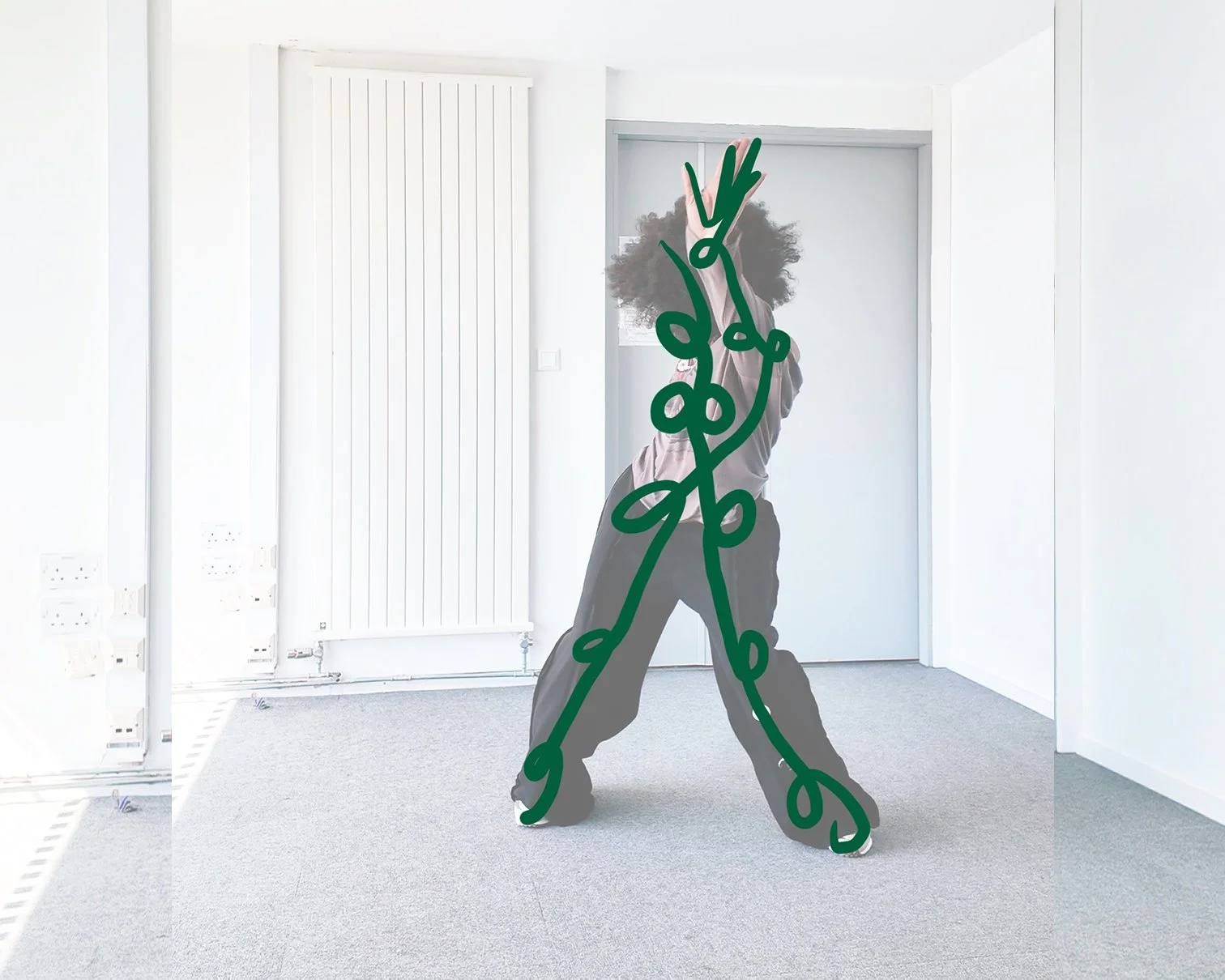
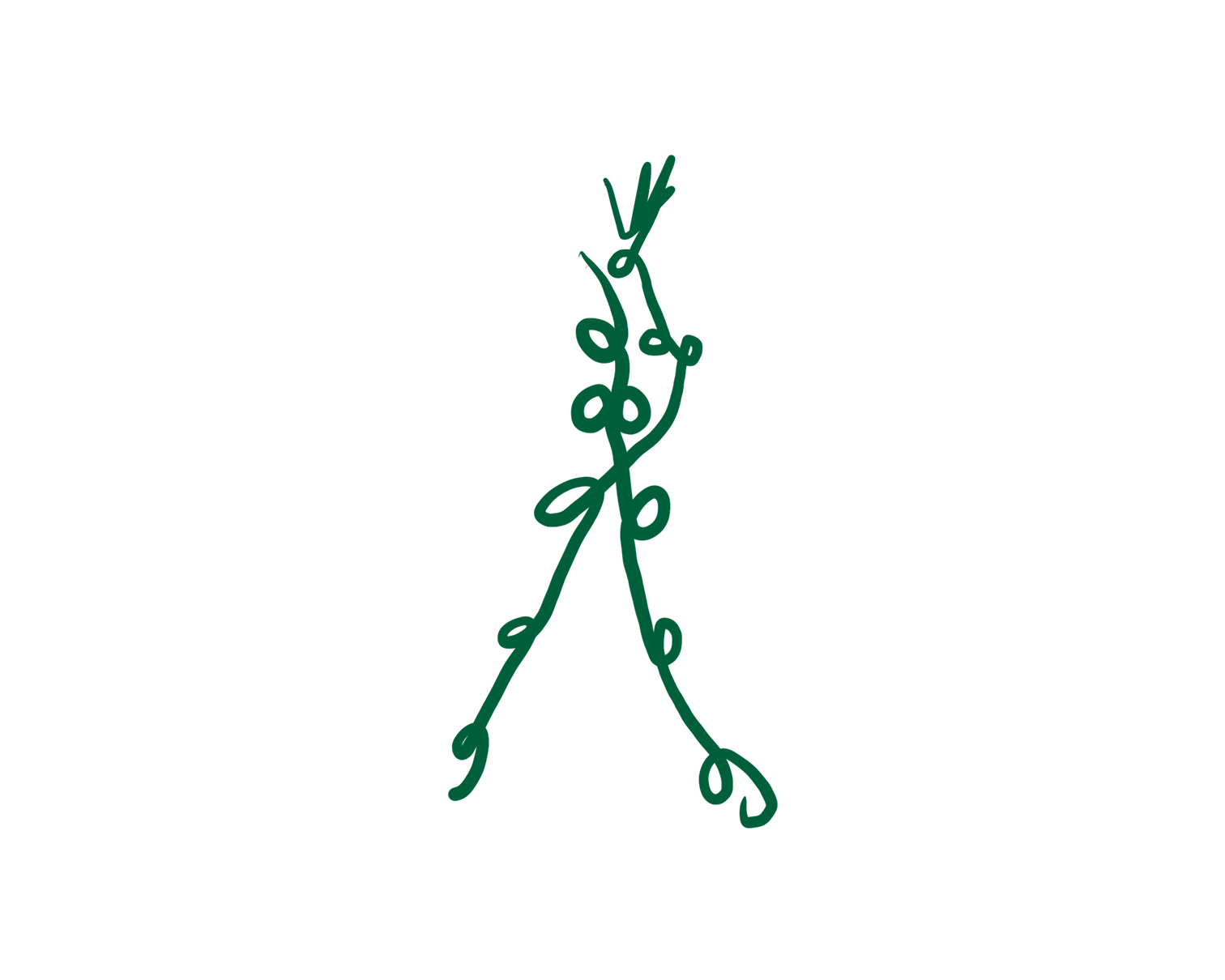
Wendy trace Still012
Wendy Still015
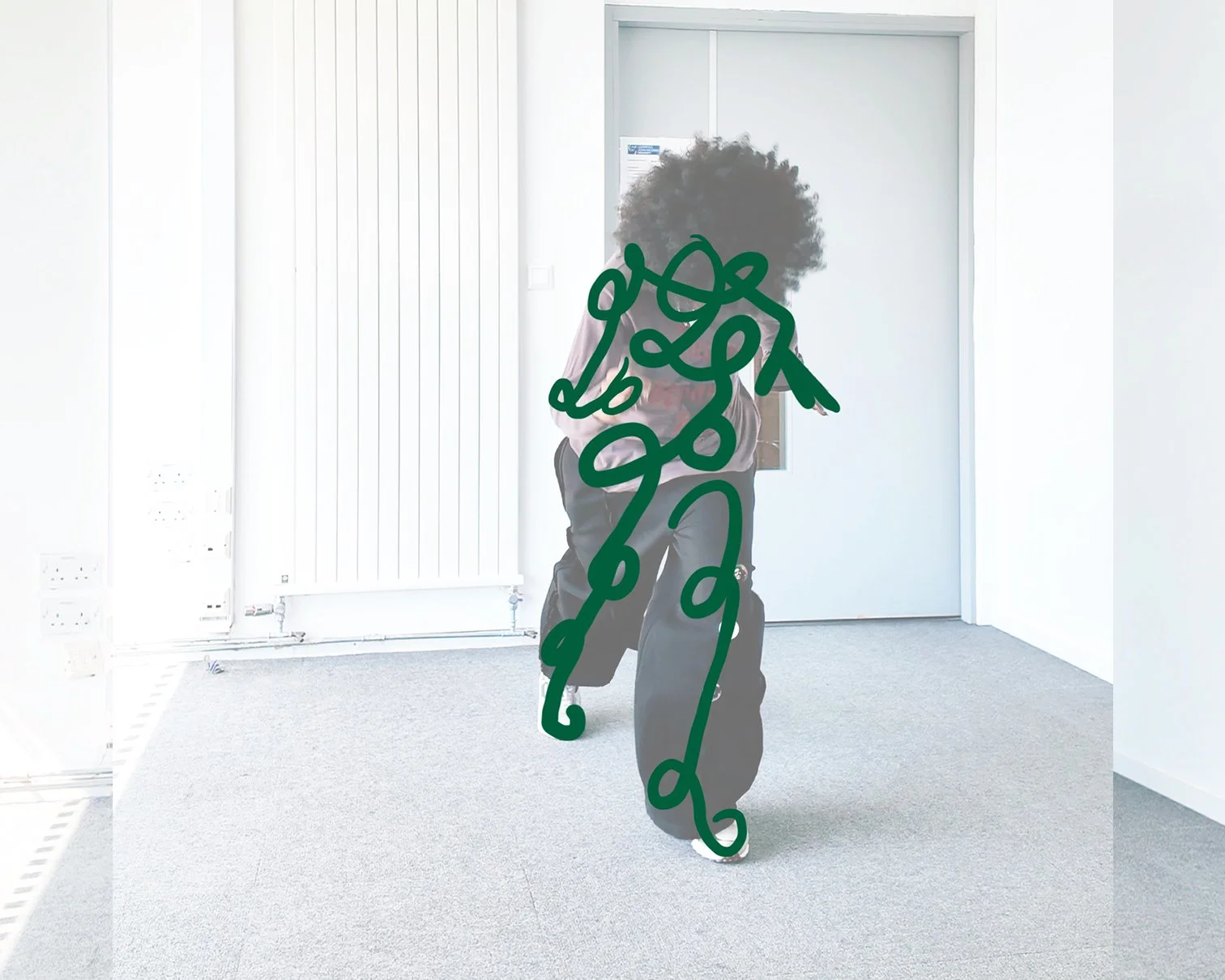
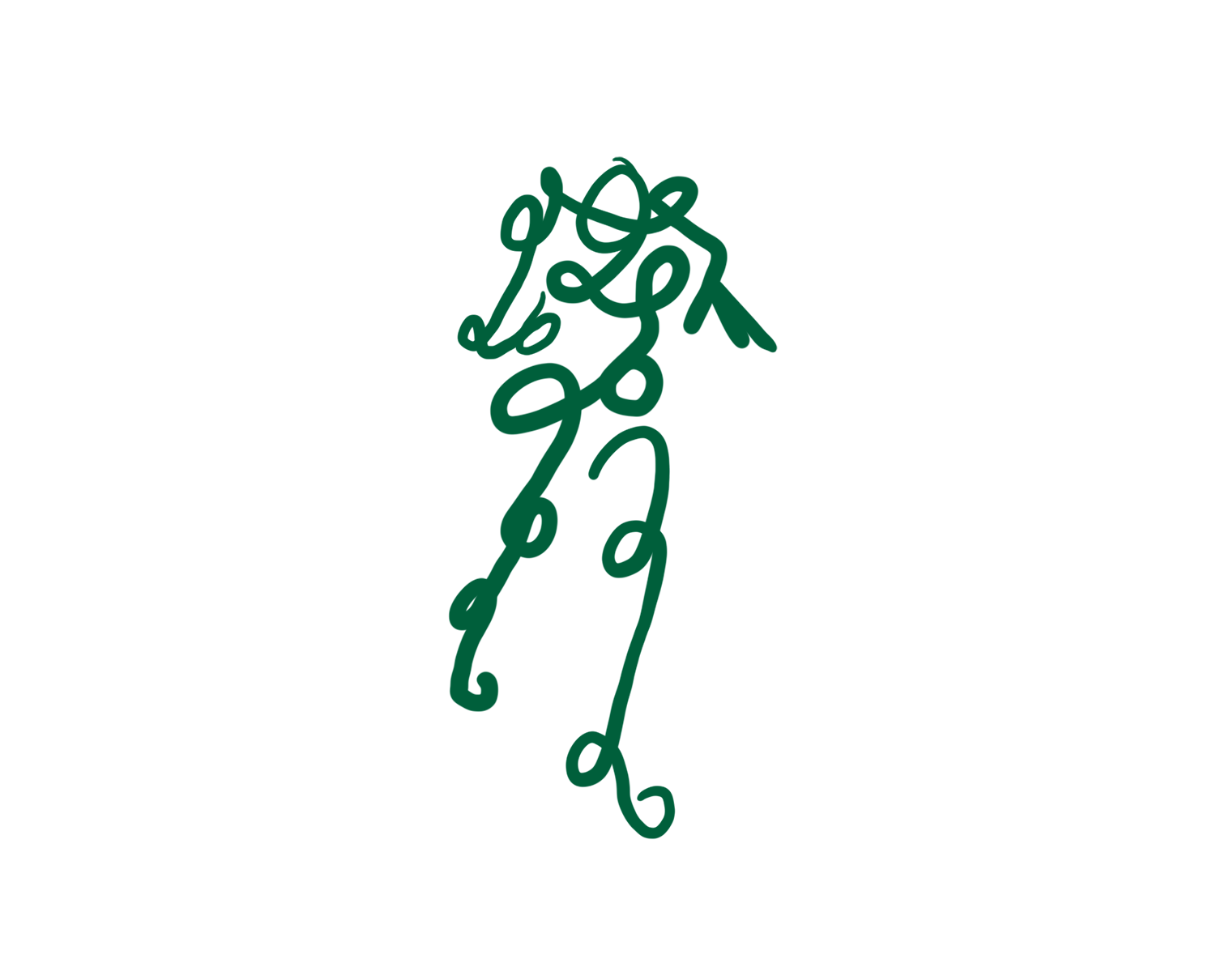
Wendy trace Still015
Wendy Still017
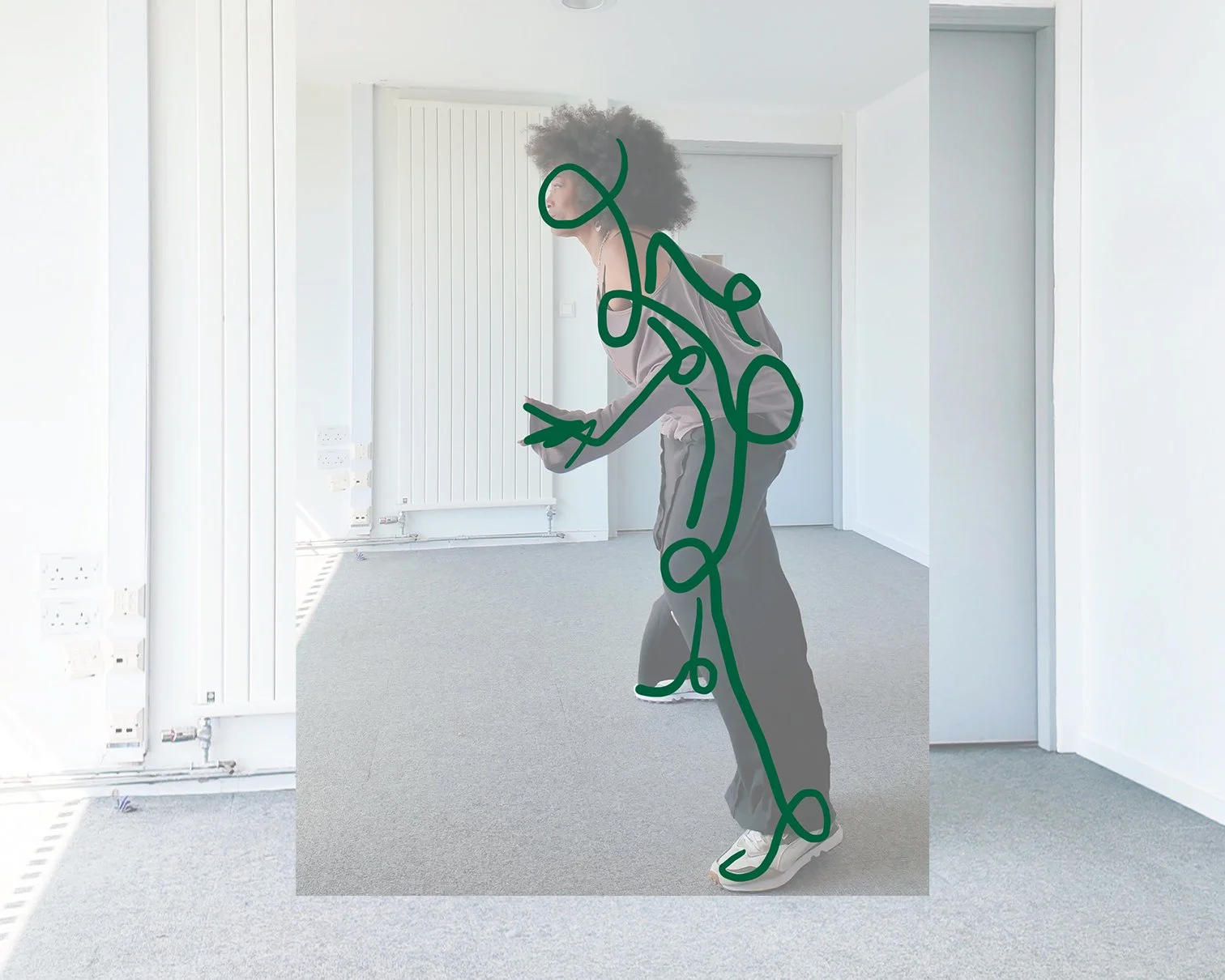
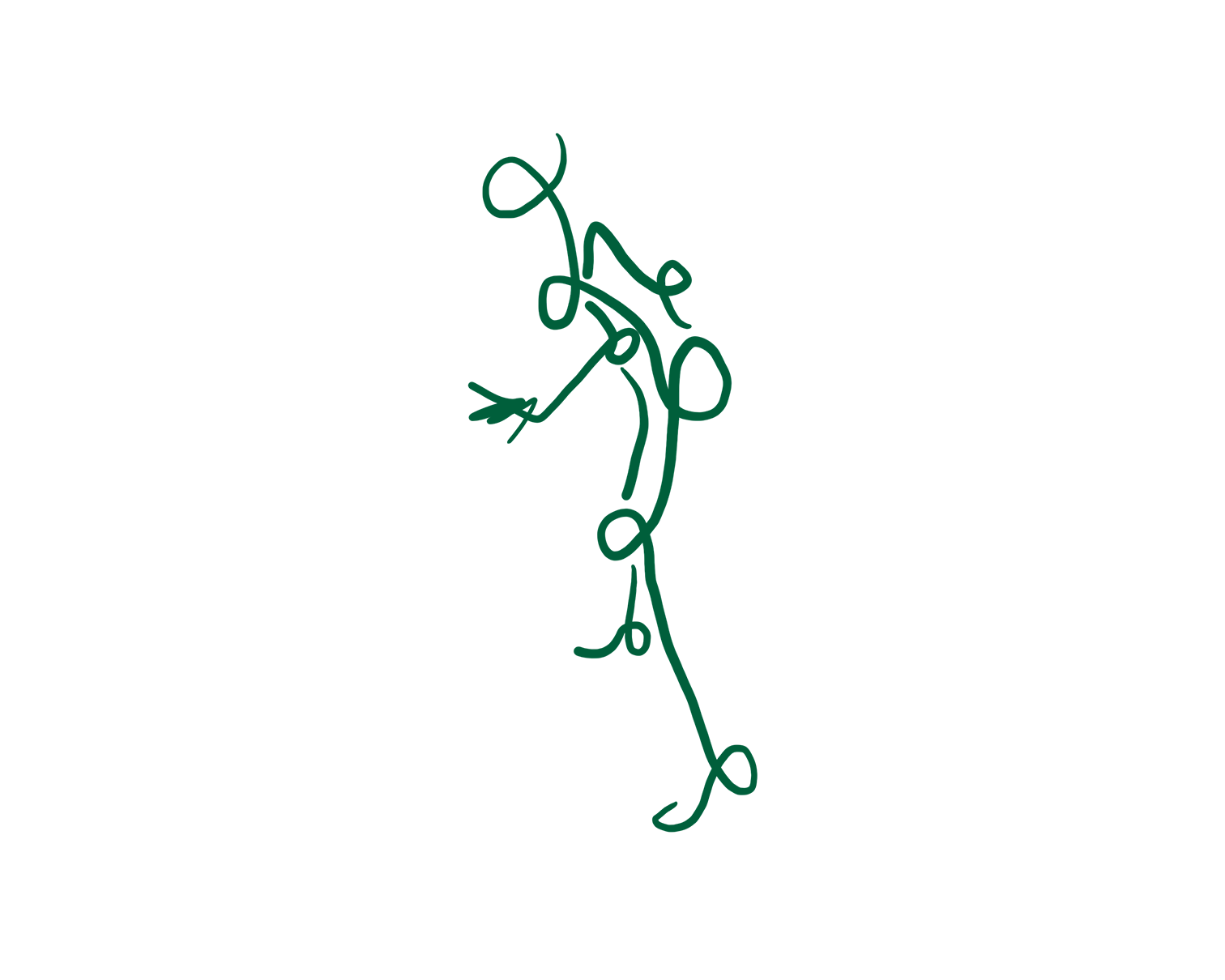
Wendy trace Still017
Surface Patterns
From Body to Line
The design translation process begins at the moment the moving body is frozen. Selected frames extracted from the session footage become the raw material of the design. Each freeze captures a specific quality of movement, a gesture, a spatial direction, a dynamic tension, and holds it still long enough to be read as form.
Using Procreate, the essential lines of each frozen pose are traced directly onto the image. These traces are not technical drawings. They are gestural recordings of what the body was doing at that precise moment. The line follows the logic of the body, not the logic of pattern making.
Pattern Swatches:
Mimi Dance Pattern
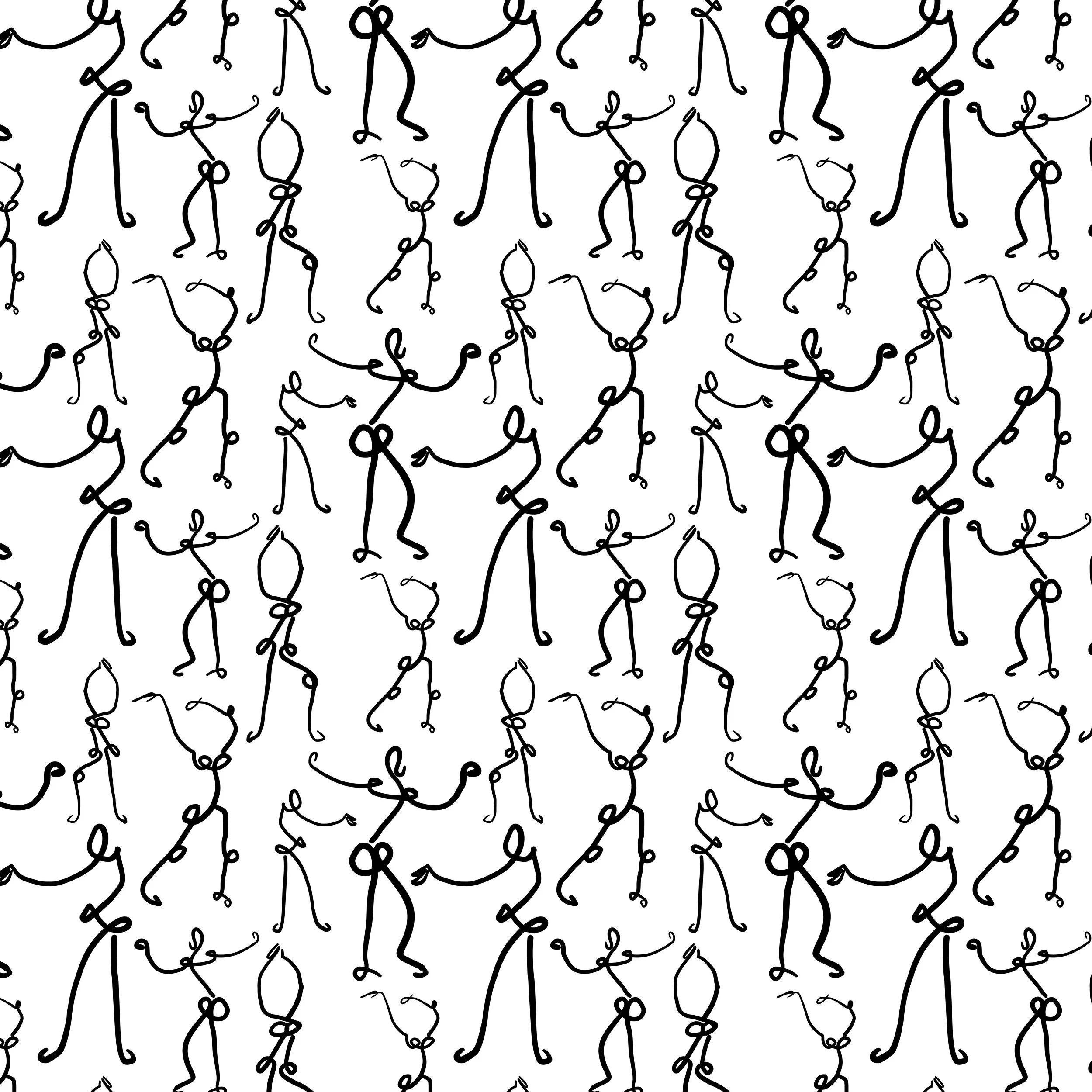
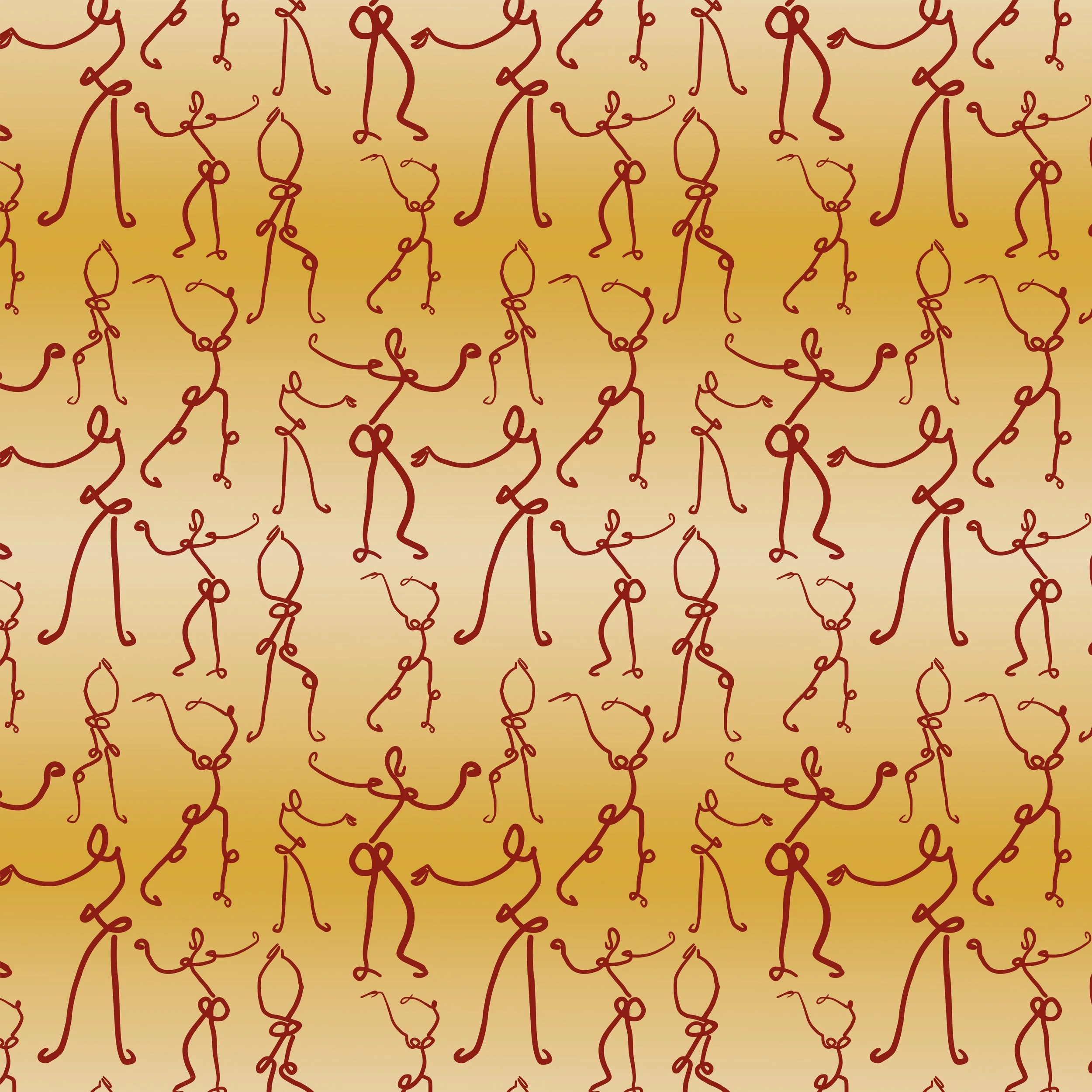
Pattern Mimi | Fluid / Organic
Movement traces from Session 1, belly dance and multi-style improvisation
The bodies in this pattern are fluid, airy and spaced. The silhouettes are light and elongated, dancing around each other without touching. The pattern breathes. It is the most legible and elegant of the three, directly reflecting the continuous flow and sensuality of Mimi's belly dance and multi-style vocabulary.
Wendy Deep House Dance Pattern
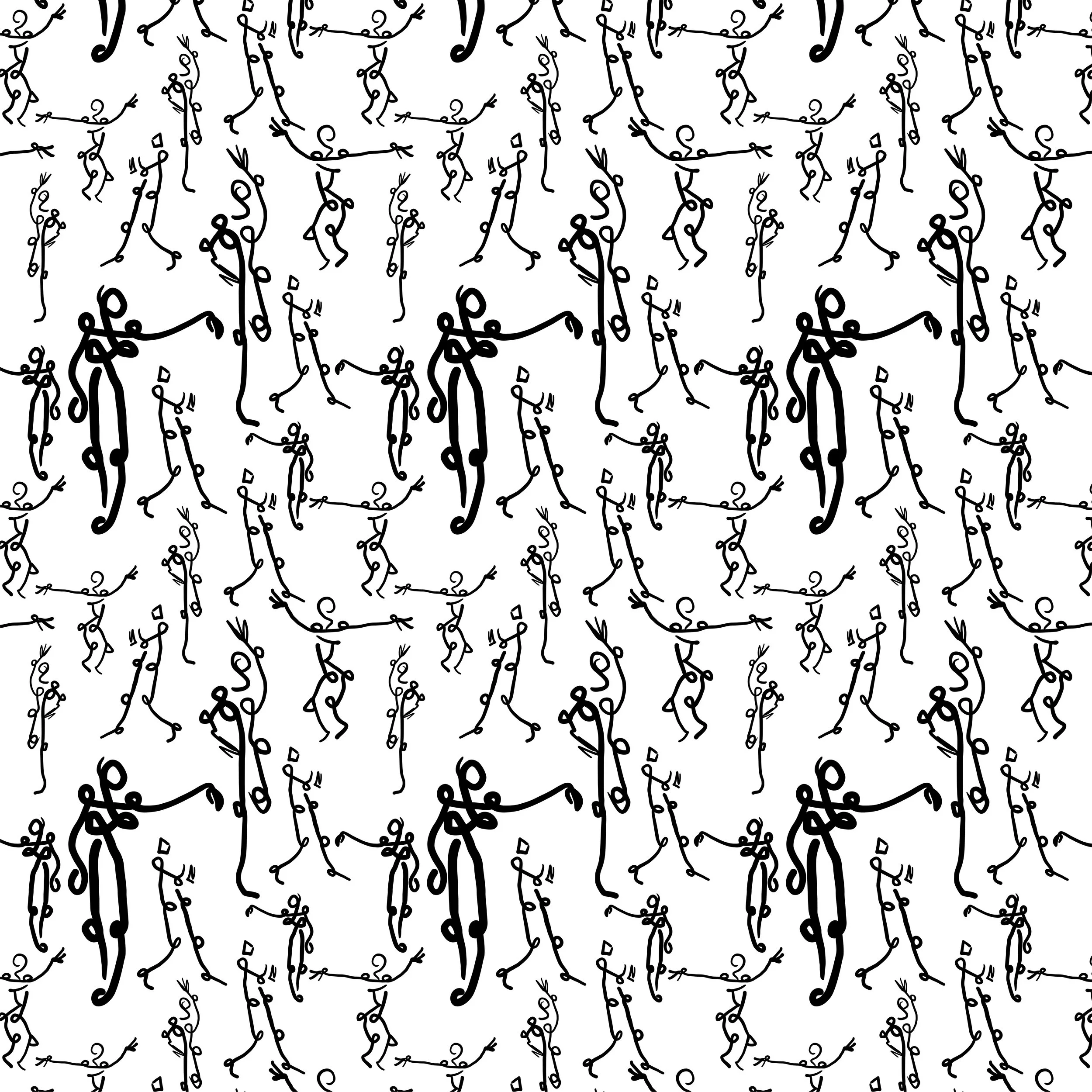
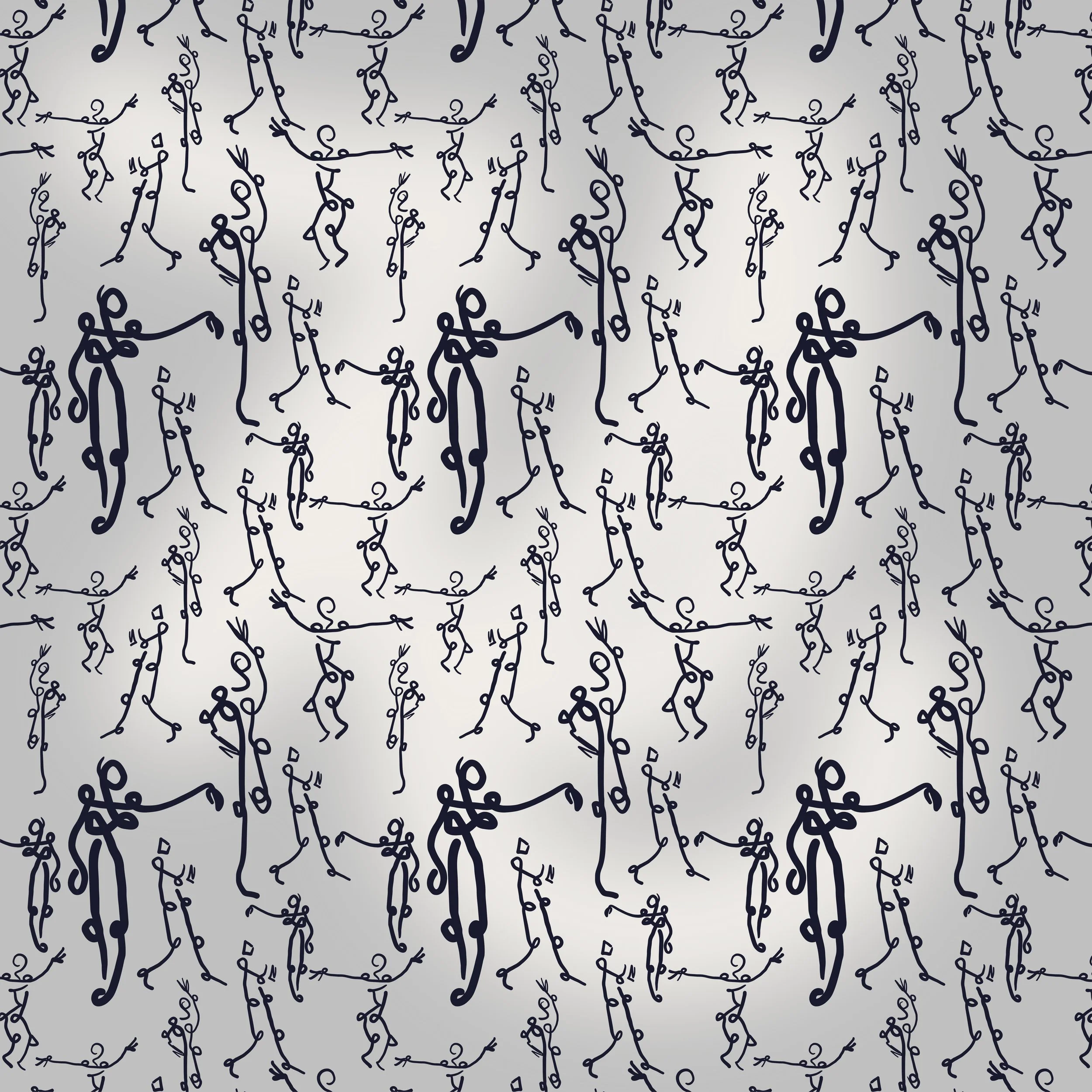
Pattern Wendy | Deep House | Sharp / Edgy
Movement traces from Session 2, Deep House exploration
This is the most dynamic and chaotic of the three patterns. Bodies move in every direction, small and large figures mixed together, multiple trajectories colliding. The energy is explosive, reflecting the spirit of discovery and spatial exploration that characterised Wendy's Deep House improvisation. Several dominant figures emerge from the density, bolder and heavier than the rest.
Wendy Ndombolo Dance Pattern
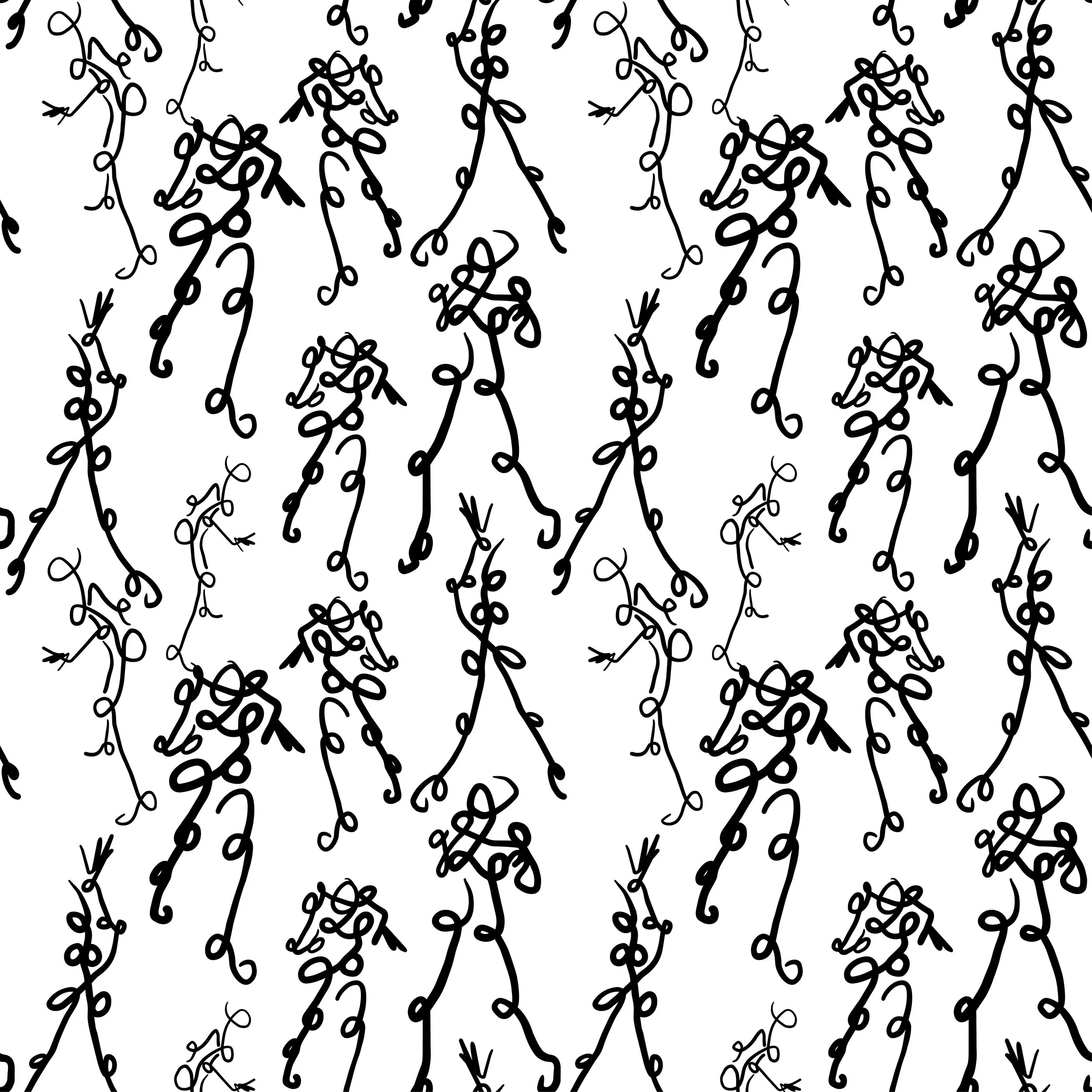
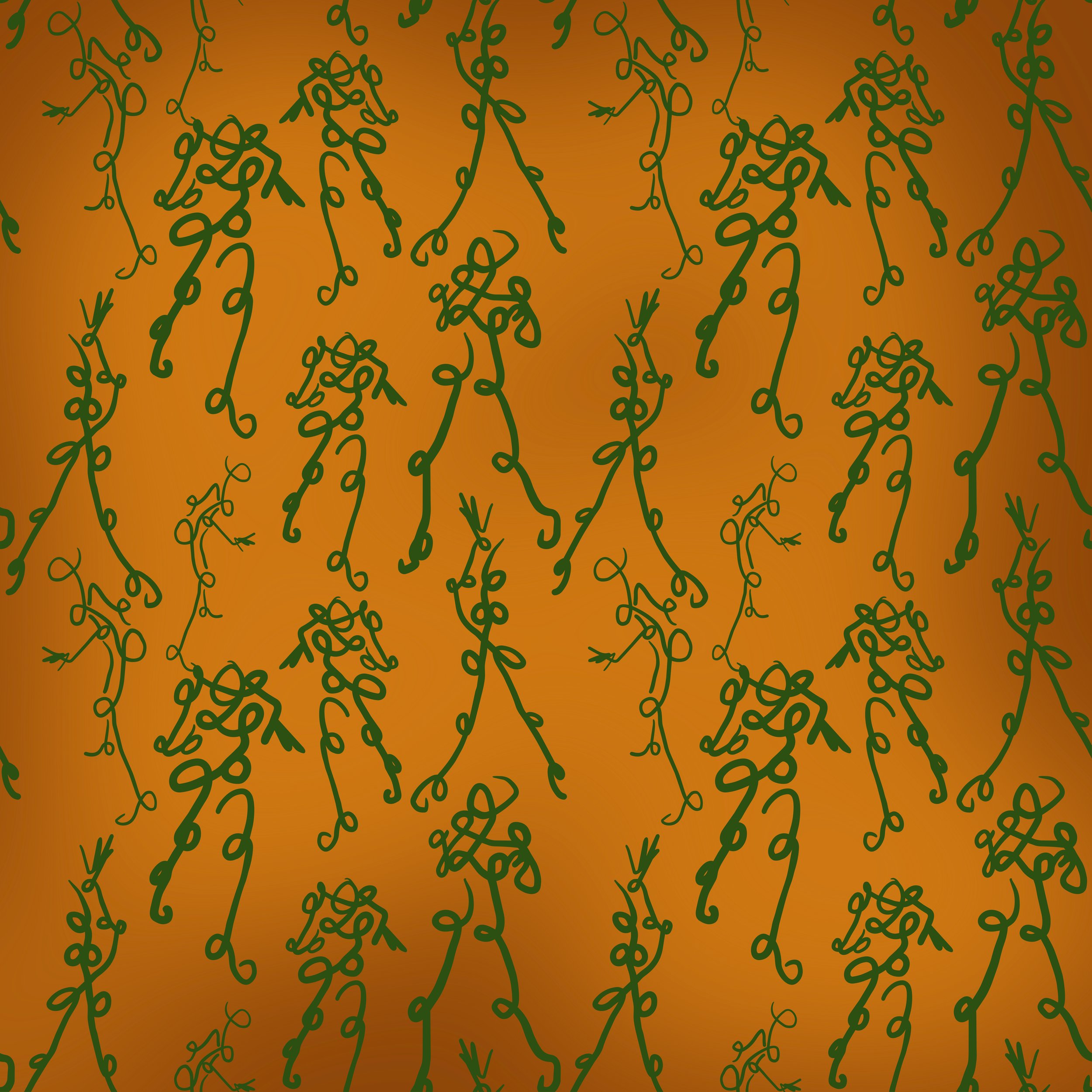
Pattern Wendy | Ndombolo | Earthy / Wide / Round
Movement traces from Session 2, Ndombolo mastery
The bodies here are dense, entangled and layered. The forms are heavy, the lines thick in places. There is a weight and a gravity to this pattern that you can feel immediately. It sits close to the ground. Deeply coherent with the earthy, wide and rooted quality of Wendy's Ndombolo movement.
The pattern swatches presented here represent the first iteration of the surface design collections. Work is ongoing to develop further variations in colour, orientation, scale and placement. New versions will continue to be added to this page as the research progresses, reflecting the living nature of the Body as Pattern methodology.
Three Visual Languages
The traces from both dancers and all three movement environments produce three distinct but complementary design registers, each translated into a surface pattern that carries the energy and dynamics of its source movement.
Fluid and organic from Mimi's session : continuous curves, soft undulations and sensual spirals rooted in her belly dance and multi-style vocabulary. The pattern breathes, the silhouettes are light and the forms never close in on themselves.
Sharp and directional from the Deep House section of Wendy's session : angular lines, geometric structure, edges that cut through space. The pattern is dynamic and explosive, bodies moving in every direction, dominant figures emerging from the chaos.
Wide and earthy from the Ndombolo section of Wendy's session : rounded volumes, ample silhouettes, forms that settle into the ground. The pattern is dense and heavy, carrying the gravity and rootedness of West African movement traditions.
These three languages will be translated into garment structures in CLO3D and Blender. The garment will carry all three registers within a single piece, shifting between fluidity, sharpness and roundness as the body and the music move through their different states.
Next Step
The traces are now the foundation. The next stage is to develop these lines into textile surface designs and garment construction, building the 3D piece that will ultimately be animated on the original music mix.
3D Garment Development
From surface pattern to digital garment
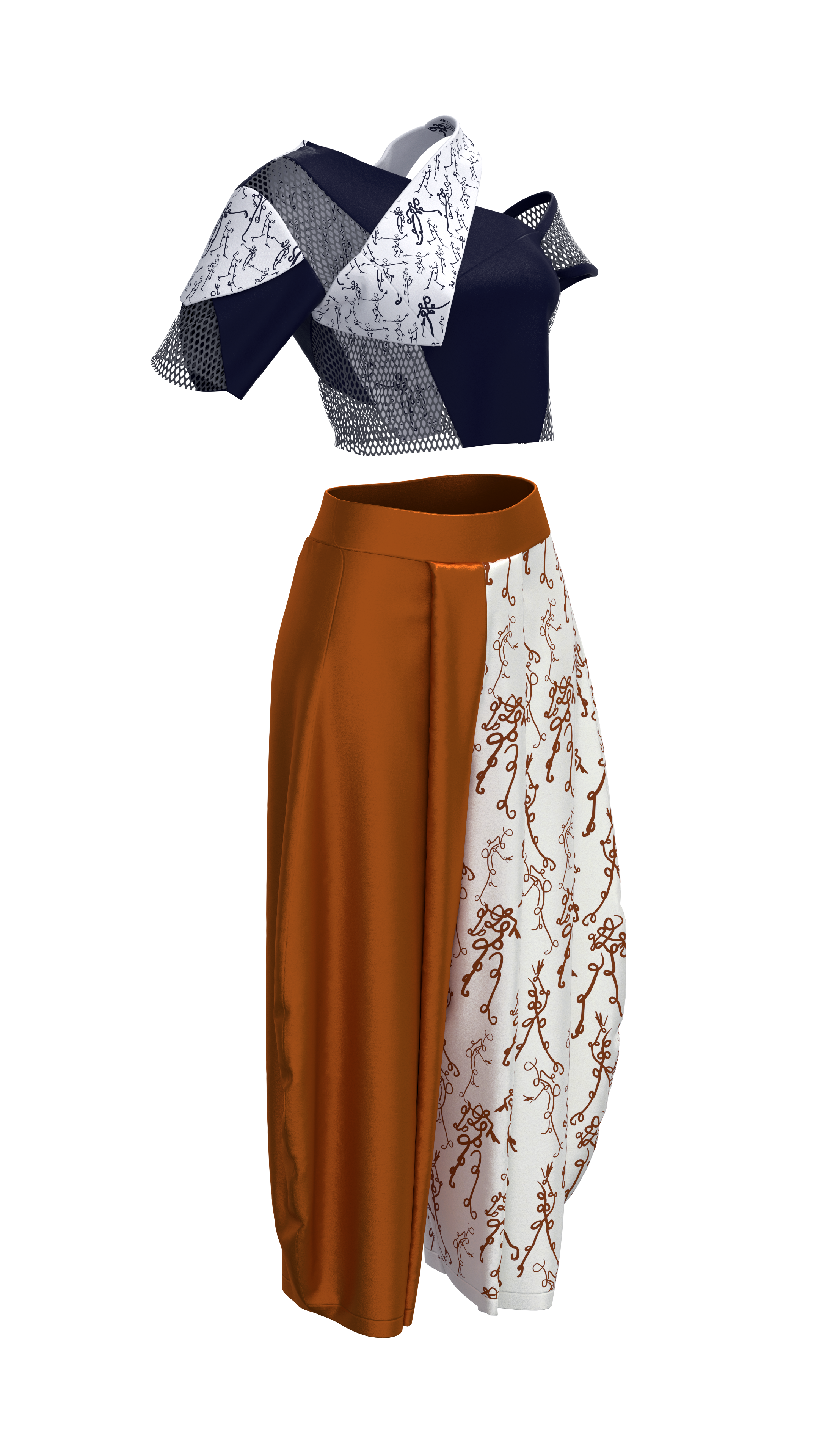
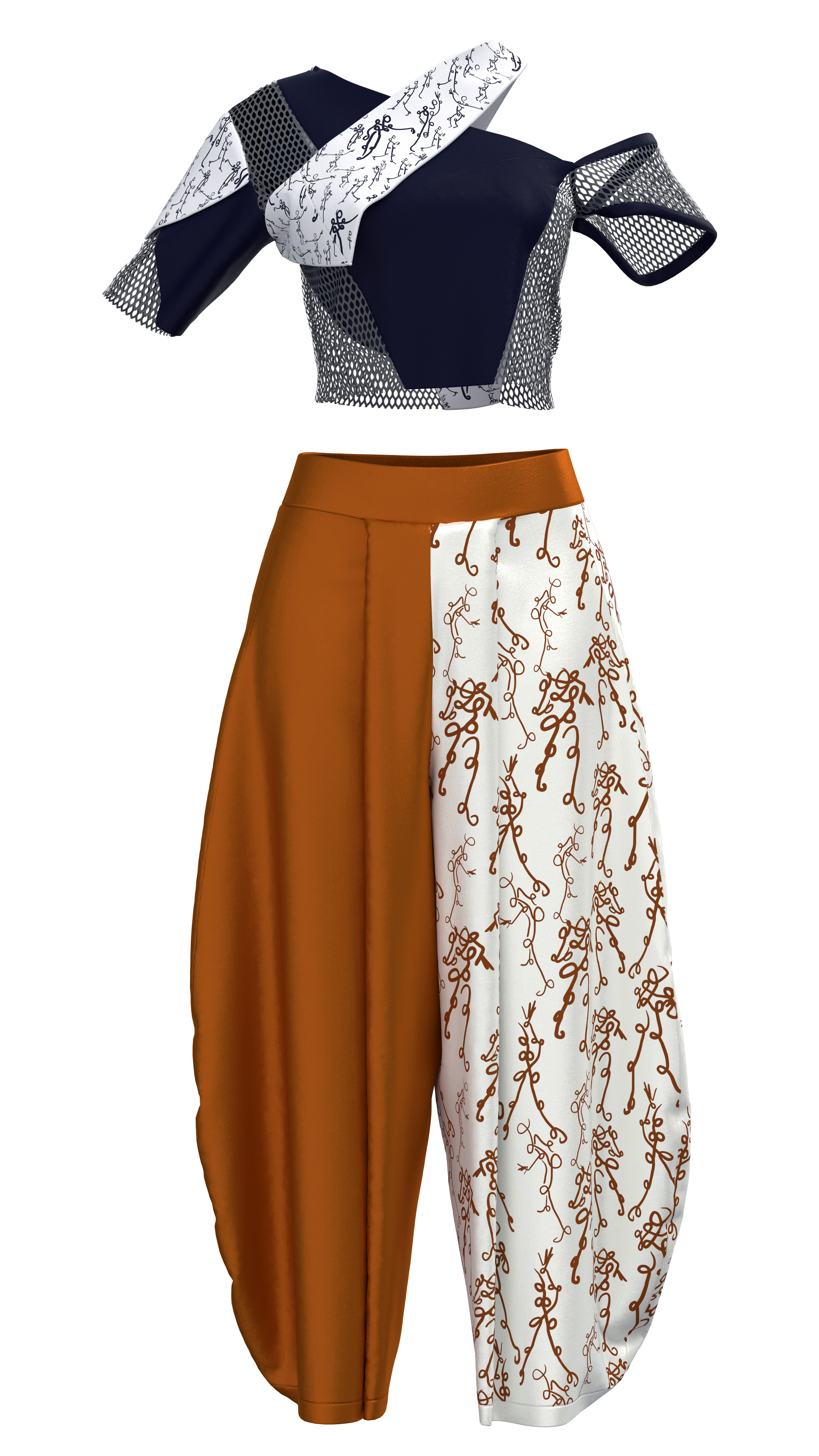
The three surface pattern collections have been applied directly to a two-piece digital garment developed in CLO3D. The garment translates the two movement registers of Wendy's session into two distinct pieces.
The top draws from the Deep House traces : asymmetric cut, geometric panelling, exposed shoulder and angular seam details. The sharp and edgy language identified by Wendy in her own freeze captures is visible in the structure of every panel.
The bottom draws from the Ndombolo traces : high-waisted palazzo silhouette, voluminous rounded hip shape and floor-length flow. The earthy, wide and grounded quality of the Ndombolo section is embodied in the volume and drape of the fabric.
The surface patterns generated from Mimi and Wendy's movement traces have been applied directly to the fabric of the garment, making the connection between body, movement and design literally visible on the cloth.
The silhouette and structural decisions of the garment were not made by the designer alone. Wendy's reading of her own freeze captures, her identification of sharp and edgy forms in the Deep House section and earthy, wide and rounded shapes in the Ndombolo section, directly informed the cut, volume and panelling of each piece. The garment is as much hers as it is mine.

FRONT
BACK
3D Garment Construction
The two-piece garment was constructed digitally in CLO3D, using the movement traces and surface patterns generated from the dance sessions as the direct foundation for every design decision. The construction process is documented in two videos : the first shows the technical building of the garment from flat pattern pieces to a three-dimensional simulation, the second shows the texturing process, where the surface patterns developed from Mimi and Wendy's movement traces were applied directly to the fabric of each piece.
CONSTRUCTION
FRONT
TEXTURING
Final 3D Renders
The completed garment is presented here in four views : front, back and two sides. The surface patterns generated from the movement traces of Mimi and Wendy are visible directly on the fabric, making the connection between body, dance and design literally readable on the cloth.
SIDE 1

Technical Exploration : Motion Capture
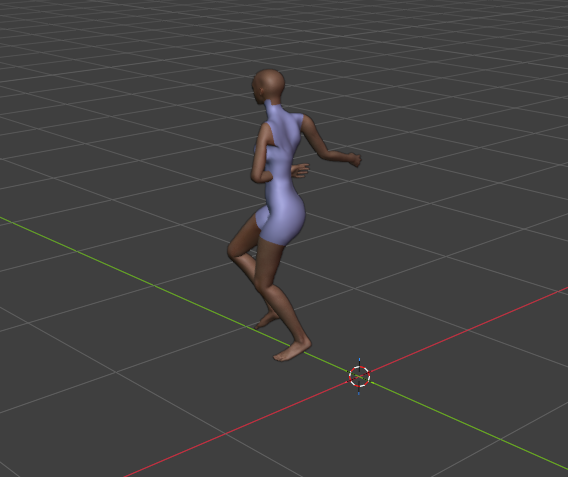
During the development process, a motion capture test was conducted using Rokoko to explore the possibility of animating the garment directly onto Wendy's recorded movement data. The experiment revealed significant technical limitations : the arms intersected with the torso, and the hands and arms crossed in unnatural ways that the software could not resolve without extensive manual correction. Rather than compromising the integrity of the movement, this approach was set aside. The decision reflects a core principle of the project : the body and its movement must be represented with honesty. A technically distorted body would betray the very research it was meant to serve.
Blender screenshot of the Rokoko motion capture test. The conversion of Wendy's dance footage revealed significant technical limitations, including unnatural arm and hand intersections that compromised the integrity of the movement data. April 2026.
SIDE 2
This is interactive !

BACK
The Garment Moves :
First Animation
The garment has been animated and synchronised to the instrumental version of The Call. Due to technical limitations encountered during the Rokoko motion capture process, including unnatural arm and hand intersections that compromised the integrity of the movement data, Wendy's recorded dance footage could not be used directly to drive the animation. Instead, movements were selected and applied manually to reflect as closely as possible the dynamic qualities and physical vocabulary of her Ndombolo session. This remains a work in progress. The motion capture issues are being addressed with the aim of eventually animating the garment directly onto Wendy's own movement data.